

Disclosure: Some links in this post are affiliate links. If you sign up, PickGearLab may earn a commission at no extra cost to you. We only recommend tools we actually use.
If you’ve been publishing a newsletter or blog for a year, you’re sitting on a course you haven’t packaged yet. The writing already exists. The expertise is already proven — people have been reading it. What’s missing is structure and a price tag.
Here’s how to turn that archive into a paid course over a single weekend, using AI to do the restructuring instead of writing everything again.
Why your archive is better raw material than a blank page
Course creators stall because they try to write a course from scratch — months of work before a single sale. But your archive has already been pressure-tested: you know which topics got opens, replies, and clicks. That feedback tells you exactly what people will pay to learn in a more organized form.

Saturday morning: Mine the archive (2 hours)
Gather your published pieces into one document (export from your blog or newsletter platform). Then have AI map the landscape:
Here are [N] articles I’ve published about [TOPIC]. Group them into 4–6 logical modules that could form a beginner-to-confident course. For each module, list which articles belong, what’s missing, and the single outcome a student should achieve by the end of it.
This does in minutes what usually takes a weekend of sticky notes: it turns a pile of posts into a curriculum with a clear progression.
Saturday afternoon: Restructure, don’t rewrite (3 hours)
Now convert articles into lessons. A blog post and a course lesson are different shapes — lessons need an objective, a single teaching point, and an action step. For each lesson:
Rewrite this article as a course lesson. Start with “By the end of this lesson you’ll be able to…”, teach the one core idea with a concrete example, and end with a specific exercise the student completes before moving on. Keep my voice; cut anything that was just blog-style filler.
Fill the gaps your Saturday-morning map flagged. This is where you add genuinely new material — usually just 2–3 connective lessons. The rest is repackaging. If you’ve written about repurposing before, this is the same muscle: see one article, seven formats.
Sunday morning: Decide the format and price
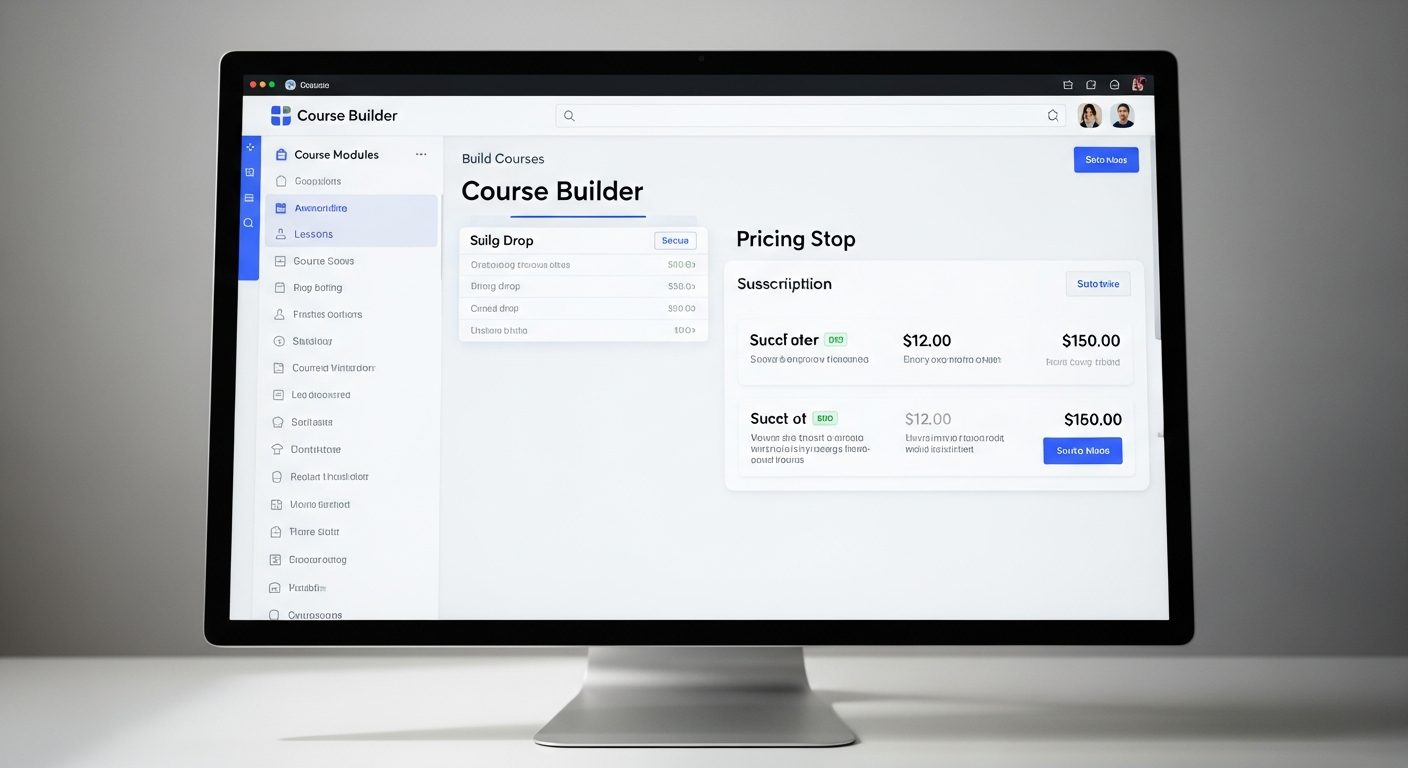
You don’t need a fancy course platform to start. Two low-friction routes:
- Email course via Kit (ConvertKit): deliver lessons as a drip sequence. Lowest setup, and Kit (ConvertKit)‘s Commerce feature lets you charge for it directly. Great for a first paid product.
- Gated content via Beehiiv: if your audience already lives in your Beehiiv newsletter, lock the course lessons behind a paid tier. Students learn where they already read.
Pricing for a first course built from an existing archive: $49–99. Low enough to convert your warm audience, high enough to be taken seriously. Offer it to your email list first at a launch discount.
Sunday afternoon: Set up delivery and a simple sales page
- Load the lessons into your chosen platform (Kit (ConvertKit) sequence or Beehiiv paid posts)
- Write a one-page sales page: who it’s for, the outcome, the module list, the price, and 2–3 lines of proof (a result you or a reader got)
- Connect payment (Kit Commerce / Stripe / Beehiiv paid subscriptions)
- Send one honest launch email to your list
Have AI draft the sales page; edit it so it sounds like you and makes only promises you can keep.
The math on a warm-audience launch
Say you have 1,000 email subscribers at a 40% open rate. A modest 2% of openers buying a $79 course is 8 sales — about $630 from a weekend of repackaging content you already owned. Repeat with the next archive theme each quarter.
The honest part
AI restructures; it can’t manufacture credibility. This works because the underlying content already earned an audience. If you’re packaging a course on a topic you’ve never actually written about or done, no amount of clever prompting will hide that. Sell what you’ve genuinely lived.
Related reading
- Canva AI vs Adobe Express: Which One Should a Solo Creator Actually Pay For in 2026?
- What Is an AI Wrapper — And Should You Pay for One or Just Use the Raw Model?
- Will AI Replace Writers? An Honest Answer — Not the One You Expect
- Write a 7-Day Email Course with AI and Sell It on Autopilot
- How Beehiiv’s Monetization Tools Work
- One Article, Seven Formats: AI Content Repurposing
About the author
Shahid Saleem is the founder and editor of PickGearLab. He tests AI tools in the real world — writing, automation, content — and writes up what actually worked. Based in Dubai.
One practical AI tutorial. Every Monday.
Workflows like this one — straight to your inbox. Free. Unsubscribe in one click.
Subscribe free →