It started with a viral demo that made the internet lose its mind. Photorealistic video of a woman walking through Tokyo, a woolly mammoth tramping through snow, and drone-style city flyovers — all generated in seconds from a text prompt. When OpenAI unveiled Sora in February 2024, it felt like the future had arrived. Now, just over two years later, OpenAI has quietly pulled the plug on the product it once described as a creative revolution. Sora is dead, and how it got there tells us more about the current state of AI than any flashy benchmark ever could.
On March 24, 2026, OpenAI announced the discontinuation of the Sora app and its public API, with the web experience set to go dark on April 26 and the API following on September 24. No press event. No apology tour. Just a terse help center article and 30 days’ notice. For a product that OpenAI once positioned as a direct rival to Hollywood, the ending was remarkably anticlimactic — and brutally revealing.
From Viral Demo to Digital Graveyard: Sora’s Short and Turbulent Life
Sora’s journey from world-beating demo to discontinued product is a masterclass in the gap between AI hype and AI reality. When OpenAI first showed the world what Sora could do in early 2024, it was genuinely jaw-dropping. Competitors scrambled. Studios panicked. Think pieces about the end of Hollywood began proliferating across every media outlet. But then something interesting happened: people tried to actually use it.
When Sora finally launched publicly in late 2024, the cracks appeared almost immediately. Generation times were slow. Costs were steep for regular users. Outputs, while impressive, were inconsistent — a hand would have too many fingers, a physics engine would hiccup mid-flight. The same issues that plagued every text-to-video model hadn’t been solved, just papered over with a more polished interface. Worldwide active users peaked around one million at launch — respectable, but nowhere near the hundreds of millions using ChatGPT — and then collapsed to fewer than 500,000, a decline that sent alarm bells ringing inside OpenAI’s product organization.
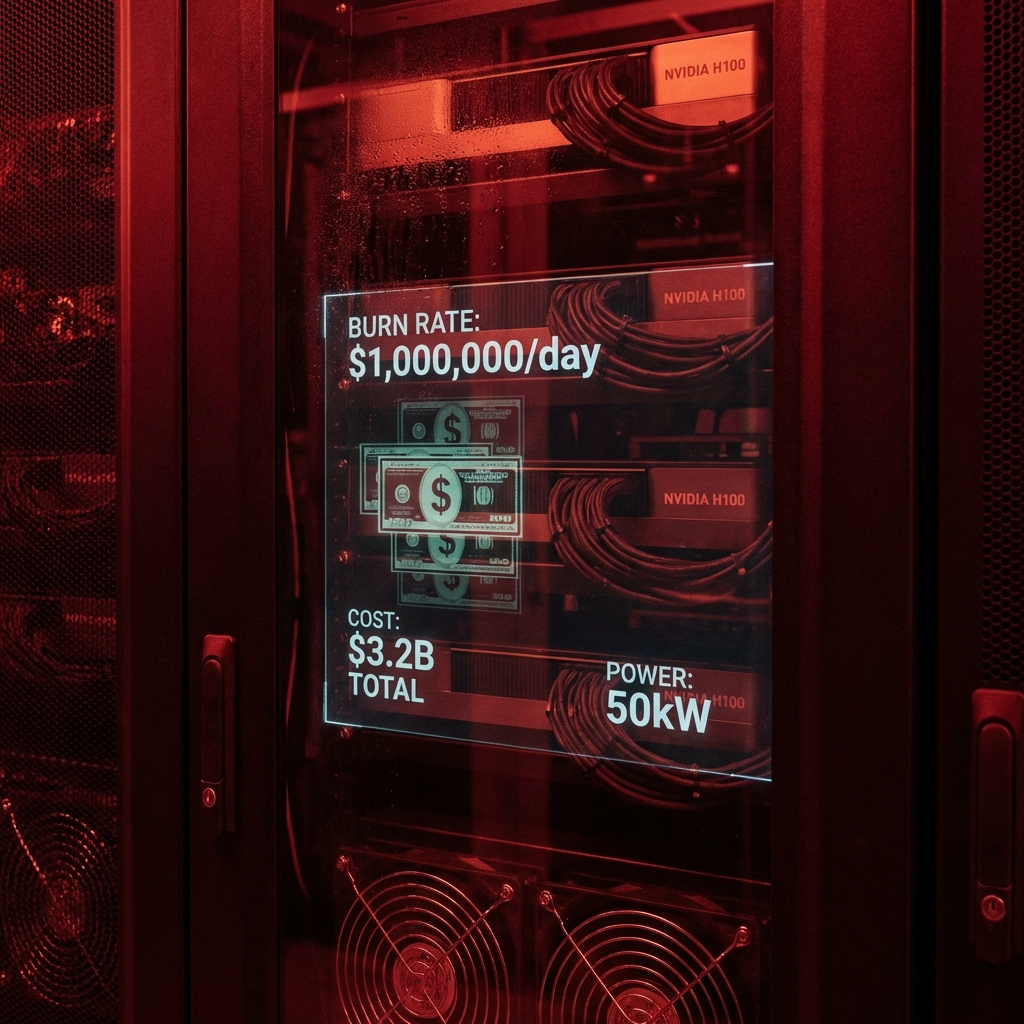
The most damning metric wasn’t the user count. It was the burn rate. Generating video at scale is extraordinarily compute-intensive, and Sora was reportedly burning through approximately $1 million per day in operational costs — not because users were loving it, but because video generation demands enormous GPU resources even for abandoned sessions and low-quality outputs. For a company already under pressure from investors to demonstrate a credible path to profitability, sustaining that kind of loss on a product with declining engagement was simply untenable.
The Shocking Economics of AI Video Generation
To understand why Sora failed, you have to understand the brutal math of video generation. Unlike text generation, where a single GPU can process thousands of tokens per second and serve multiple users simultaneously, video generation requires rendering dozens of frames per second at high resolution, each frame computationally equivalent to generating a complex image. A 10-second clip at 1080p resolution can consume more GPU compute than generating thousands of words of text.
This compute intensity creates a fundamental problem for a consumer product: the economics only work if users are paying significantly more per use than they do for text-based AI tools, or if the volume of usage is so high that infrastructure costs can be amortized across a massive user base. Sora achieved neither. Subscription pricing kept costs low enough to attract casual users, but not high enough to cover the compute cost of even modest usage patterns. And the user base, while initially enthusiastic, turned out to be far smaller and less sticky than OpenAI had hoped.
Compare this to GPT-5.4, released in early March 2026, which reportedly generates revenue at a rate that comfortably exceeds infrastructure costs thanks to enterprise adoption and the high-value professional workflows it enables. Or to Claude’s API, where enterprise customers pay premium rates for coding and analysis tasks they’d otherwise hire expensive engineers to perform. Video generation, for all its visual splendor, simply hasn’t found the killer use case that justifies its cost structure at scale.
The Disney Deal That Died with the Product
Perhaps no detail captures Sora’s collapse more dramatically than what happened to the Disney partnership. Disney had committed $1 billion to a multi-year deal built around Sora, envisioning AI-assisted production pipelines for everything from animated content to marketing materials. It was exactly the kind of high-profile enterprise relationship that would have validated Sora’s commercial thesis and provided the sustained revenue needed to justify its infrastructure costs.
According to reporting from Bloomberg and multiple industry sources, Disney executives learned about the Sora discontinuation less than an hour before the public announcement. There was no advance notice. No renegotiation. The deal — and the entire strategic relationship — died with the product. The incident has since become a cautionary tale inside enterprise technology circles about the risks of building critical workflows on consumer-grade AI products from companies whose strategic priorities can shift overnight.
The fallout has been significant. Disney is now reportedly in advanced discussions with multiple AI video providers, including Runway ML, Pika, and Google’s Veo platform. But the trust damage is real, and OpenAI’s reputation as a reliable enterprise partner has taken a meaningful hit at exactly the moment it is trying to compete with Anthropic for Fortune 500 relationships.
Claude Code and the Competitive Pressure Nobody Saw Coming
Inside OpenAI, the official explanation for Sora’s shutdown centers on the “unsustainable economics of video generation at scale” — which is true, but incomplete. The fuller picture, according to multiple people familiar with the situation, involves a recognition that the company had badly misallocated engineering resources at a critical moment in the competition for enterprise AI revenue.
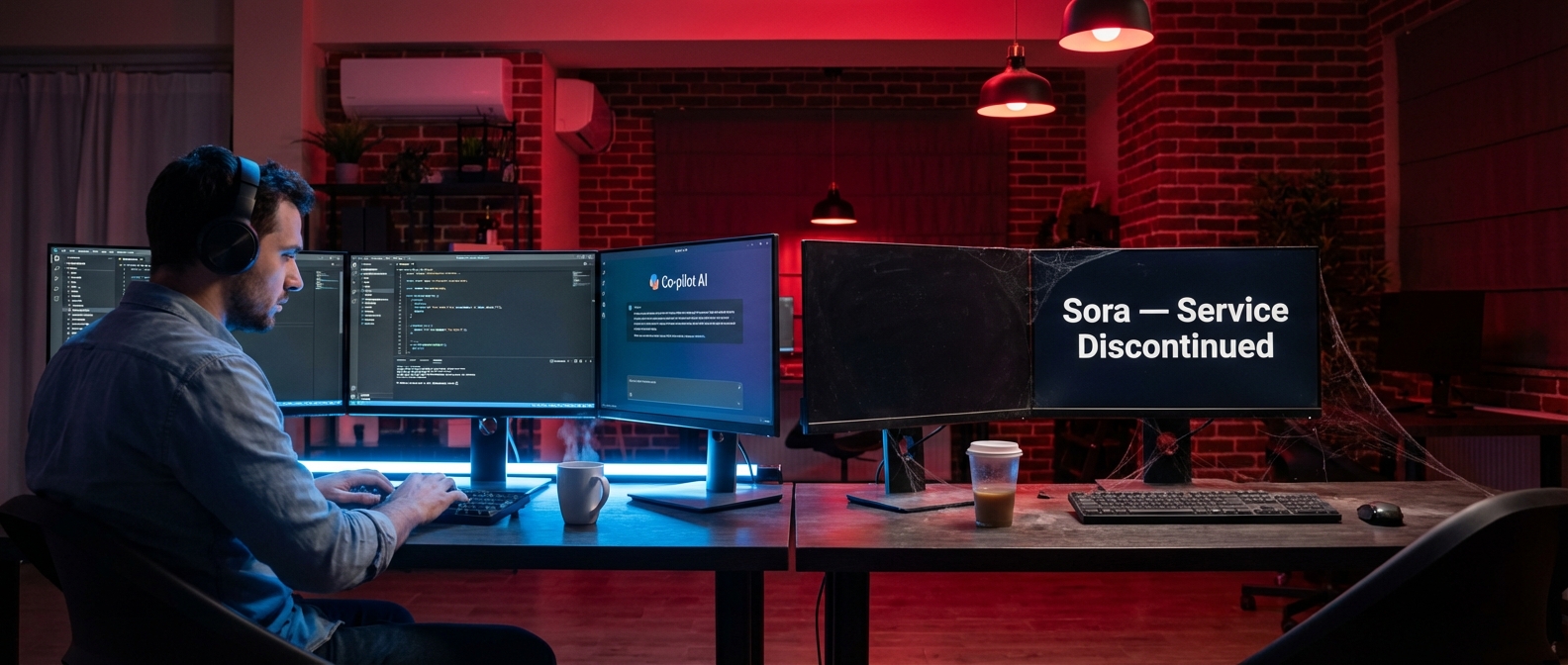
While an entire product team was focused on making Sora work, Anthropic was quietly and systematically winning over the software engineers and enterprises that generate the lion’s share of AI revenue. Claude Code — Anthropic’s agentic coding tool — launched in early 2025 and has since achieved a level of developer adoption that has genuinely rattled OpenAI’s leadership. Enterprise customers who trialed both Claude Code and GitHub Copilot (powered by OpenAI models) were choosing Claude at a rate that alarmed OpenAI’s sales teams.
The lesson OpenAI appears to have internalized — albeit painfully — is that the AI products most likely to generate sustainable revenue are those that replace or significantly enhance paid professional workflows, not those that enable consumer entertainment. A developer saving two hours of coding work per day will pay $200 a month without hesitation. A consumer who occasionally wants to generate a 10-second video clip will not. Sora was built for the latter use case, at enormous cost, while the battle for the former was being lost elsewhere.
OpenAI’s Sweeping Product Consolidation: Sora Was Just the Start
Sora is not the only casualty of OpenAI’s strategic reset. The Sora shutdown is part of a broader product consolidation push that also includes the discontinuation of the DALL-E 3 standalone app, the winding down of the GPT Builder marketplace (most third-party GPTs will stop functioning by June 2026), and a significant reduction in the number of distinct ChatGPT subscription tiers.
The consolidation reflects a company trying to rationalize a product portfolio that expanded too aggressively during the hype cycle of 2023-2024. CEO Sam Altman acknowledged as much in an internal memo leaked to The Verge in late March: “We built too many things for too many use cases and not enough of the one thing that matters most — a genuinely transformative tool for professional work.” The new strategy, as articulated in the memo, centers on GPT-5.4 and its successors as an integrated platform for enterprise workflows, with everything else subordinated to that core mission.
For the thousands of developers and companies who built products on top of Sora’s API, the shutdown is a painful reminder of the fragility of building on closed AI infrastructure. The 30-day notice for the consumer app and six-month runway for the API are generous by some standards, but inadequate for businesses that have built significant workflows around the product. Migration guides and alternative integrations are being assembled under considerable time pressure.
What Sora’s Death Signals About the Broader AI Market
Step back from the product specifics and Sora’s failure tells a broader story about where we are in the AI maturity curve. The first wave of AI products succeeded primarily by being genuinely novel — by showing users something they had never seen before and couldn’t get anywhere else. ChatGPT was the text version of that. Sora was supposed to be the video version. But novelty, it turns out, is not a durable competitive advantage when compute costs are high and the use case is fundamentally recreational.
The AI products that are thriving in 2026 share a common characteristic: they are deeply embedded in professional workflows, produce outputs that people are already being paid to create, and save enough time or improve quality enough that their value is obvious to the enterprise buyers who control budget. Copilot, Claude Code, Gemini for Workspace, and Cursor have all achieved this. Sora, DALL-E as a standalone product, and a long list of consumer-facing AI toys have not.
This doesn’t mean AI video generation has no future. Runway ML and Pika have built more sustainable businesses by targeting professional video editors and studios rather than general consumers. Google’s Veo platform, deeply integrated into YouTube Studio workflows, is showing promising early adoption. The technology is real and the potential is enormous — but the path to sustainable AI video products runs through professional tools, not consumer entertainment.
Conclusion: The AI Reckoning Has Arrived
OpenAI killing Sora is not evidence that AI is failing. It is evidence that AI is maturing. The era of throwing billions of dollars at impressive demos and hoping usage catches up is giving way to a more disciplined focus on products that solve real, expensive professional problems for customers willing to pay accordingly. That is ultimately a healthy development, even if the transition is painful for everyone who bet on Sora.
The deeper lesson is one that anyone who has watched technology cycles before will recognize: the products that survive are not always the ones that made the best first impression. They are the ones that find the intersection of genuine utility, sustainable economics, and a user base willing to pay for value delivered. Sora dazzled the world and then couldn’t make the numbers work. Its successors — whatever form they take — will need to do both.
For now, OpenAI’s video ambitions are officially on hold, Disney is shopping for a new AI partner, and the AI industry is learning an expensive lesson about the difference between what is possible and what is profitable.


Leave a Reply