

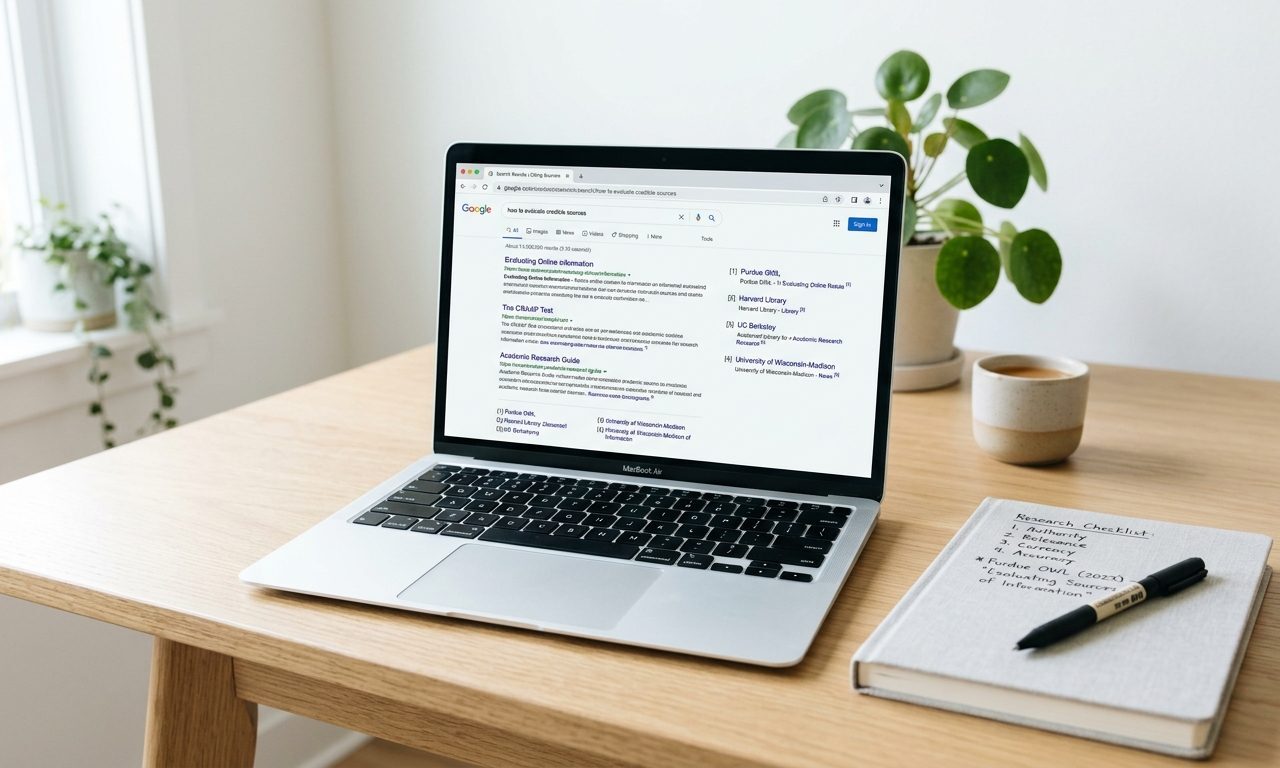
TL;DR: Answer the question in the first 40 words, structure content so a machine can lift a clean answer, put verifiable numbers and dates in the text, and make sure you are indexed in Bing — ChatGPT’s browsing leans on it. Structural fixes show up in Perplexity within roughly a week; ChatGPT takes longer.
Why this is suddenly worth your attention
A large share of B2B buyers now use generative AI somewhere in their purchase research, and a meaningful portion begin in an assistant rather than a search engine. Whatever the exact percentages — and the ones circulating come mostly from vendors selling optimisation services, so treat them as directional — the behaviour change is real and you can verify it on yourself. When you last needed to understand an unfamiliar product category, did you open Google or an AI assistant?
The consequence: there is now a second discovery surface, it cites a small set of sources per answer, and being on that list is worth more than being tenth on a results page.
This is being called Generative Engine Optimization or Answer Engine Optimization. The name matters less than the mechanic.

How citation actually works
When an assistant answers a question needing current information, it retrieves candidate pages, extracts passages, and composes an answer citing what it used. So you are optimising for two separate gates: being retrieved, and being quotable once retrieved.
Most people only work on the first. The second is where the easy wins are.
The seven things that actually move it
1. Answer in the first 40 words
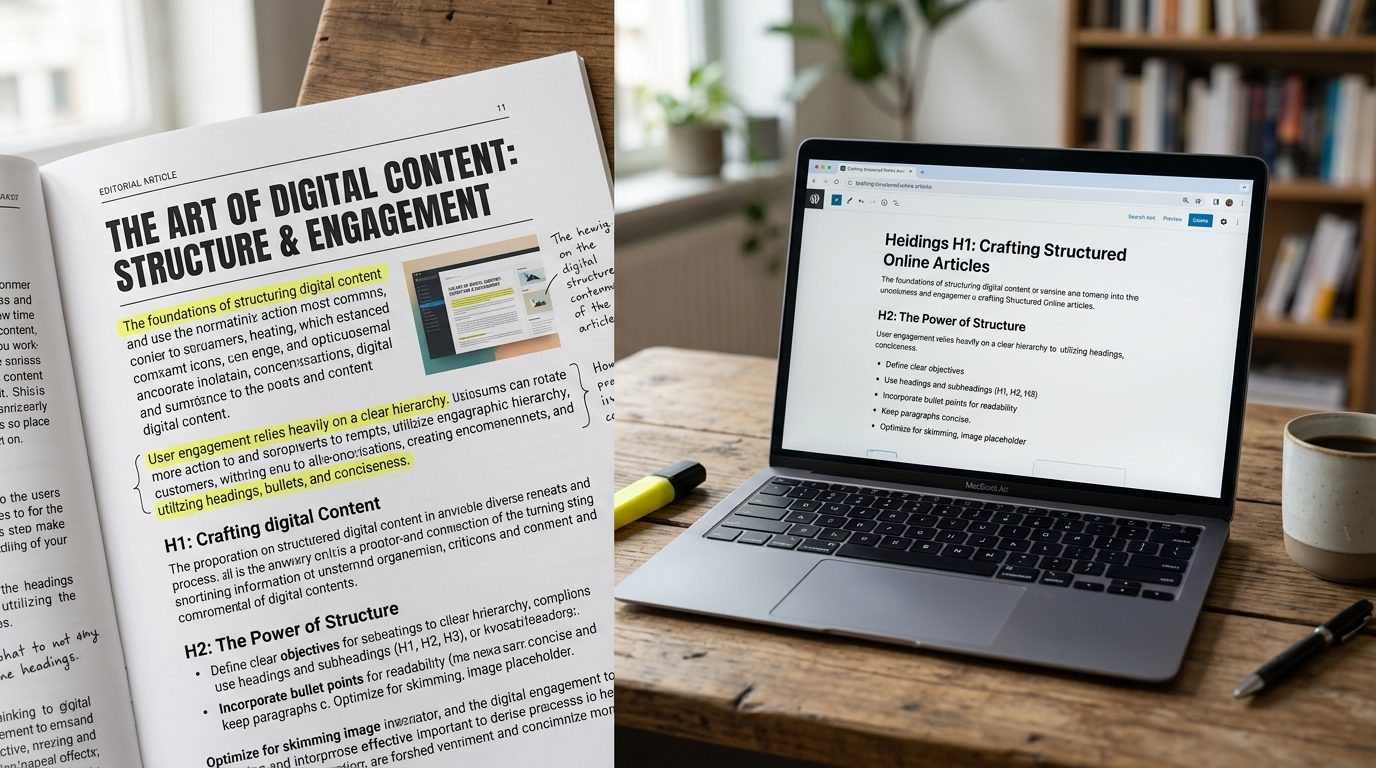
Put a direct, self-contained answer immediately under the heading that asks the question. Not a preamble, not “in this article we’ll explore”. A passage that can be lifted whole and still make sense is a passage that gets lifted.
Test: read any single paragraph in isolation. Does it answer something completely, without the paragraph before it? If not, it is not quotable.
2. One question per heading, phrased as people ask it
Headings are retrieval anchors. “Pricing” is weak. “How much does an enterprise SD-WAN deployment cost?” is strong, because it matches the shape of a real query.
3. Specific numbers, dates and named entities
Assistants favour passages containing checkable specifics over general claims. “Response times improved significantly” is unciteable. “Median resolution fell from 14 hours to 6 hours between January and June 2026” is exactly what gets pulled.
This has a side effect worth naming: it forces you to actually know things. Which is the same reason it works.
4. Strip hedging language
“We think”, “in our opinion”, “arguably”, “it could be said that” — these make a passage a poor candidate for a factual answer, because the model is looking for something assertable. State things plainly, and where you are genuinely uncertain, say what the uncertainty is rather than fogging the whole sentence.
5. FAQ and structured data
A properly marked-up FAQ block gives a machine pre-separated question/answer pairs. This is among the highest-leverage on-page changes available, and most sites either skip it or generate it badly with questions nobody asks.
6. Get indexed in Bing
Widely reported and easy to verify: ChatGPT’s browsing results lean heavily on Bing’s index. If you are not in Bing, you are invisible on that surface regardless of how good the content is. Submit your sitemap in Bing Webmaster Tools — it takes ten minutes and is the single most mechanical item on this list.
7. Freshness, for the platforms that weight it
Perplexity in particular favours recently-updated, well-cited material. A dated review pass on your important pages — updating figures, adding a “last reviewed” date, refreshing examples — is worth more here than it ever was for traditional SEO.
A worked example
Before — a section headed “Our Approach to Pricing”:
“We believe pricing should be transparent and tailored to each client’s unique requirements. Our team works closely with you to understand your needs and build a commercial model that delivers value…”
Nothing here is quotable. No question is answered, there is no number, and every sentence hedges.
After — headed “How much does a multi-site SD-WAN deployment cost?”:
“A multi-site SD-WAN deployment typically costs between [X] and [Y] per site per month, depending on bandwidth, resilience and contract term. A 40-site deployment at standard resilience usually lands near [Z] per month on a three-year term. Installation is charged separately and ranges from [A] to [B] per site depending on access type.”
Same information, restructured into something a machine can extract and a human can act on. The second version is also simply a better page for a reader, which is the useful thing about this whole discipline: unlike a lot of SEO tactics, optimising for citation mostly means writing more clearly.
The FAQ block, done properly
Worth its own section, because most FAQ blocks are useless — invented questions nobody asks, answered in marketing language.
Build it from real questions. Three sources in order of value: questions prospects actually ask on calls (write them down for two weeks), the “people also ask” boxes on your target queries, and your support inbox.
Then answer each in two to four sentences, leading with the direct answer. Not “great question, there are several factors to consider”. The answer, then the nuance.
Weak: “How long does implementation take?” → “Implementation timelines vary depending on the complexity of your environment and the scope of deployment. Our team works with you to build a plan that fits your requirements.”
Citable: “How long does implementation take?” → “A single-site deployment typically takes 2-4 weeks from contract to live. Multi-site deployments run 6-16 weeks depending on site count and access type, with survey and circuit delivery accounting for most of the elapsed time. Sites needing new fibre add 8-12 weeks.”
The second answers the question, gives an assistant three separately extractable facts, and gives a reader a reason to trust you. Those turn out to be the same thing, which is the useful discovery in this whole discipline.
How to measure it
There is no equivalent of Search Console yet, so do it manually:
- Write down the 15 questions a buyer would ask before choosing something like yours.
- Ask each in ChatGPT, Perplexity, and Google’s AI results. Record which sources get cited.
- Repeat monthly. You are watching for your domain appearing, and for which competitors keep showing up.
Thirty minutes a month, and it tells you more than any tool currently sold for this.
Timing expectations
Reported observations — not guarantees — are that structural changes appear in Perplexity within about a week, ChatGPT within a few weeks, and Google’s AI answers considerably slower. Do not conclude anything from a two-day check.
What has not changed
Everything here sits on top of the same foundation: content worth citing, a site that can be crawled, and enough authority that you are in the candidate set at all. If your pages are not indexed anywhere, none of this applies yet — start with the one-hour SEO audit, which covers the indexation question first. And the underlying quality bar is the same one discussed in whether AI content can rank: undifferentiated material does not get cited either, because there is no reason to pick it over the other forty pages saying the same thing.
About the author
Shahid Saleem is the founder and editor of PickGearLab. He tests AI tools in the real world – writing, automation, content – and writes up what actually worked. Based in Dubai.
New workflows, straight to your inbox.
Workflows like this one, as they are published. Free. Unsubscribe in one click.
Subscribe free →