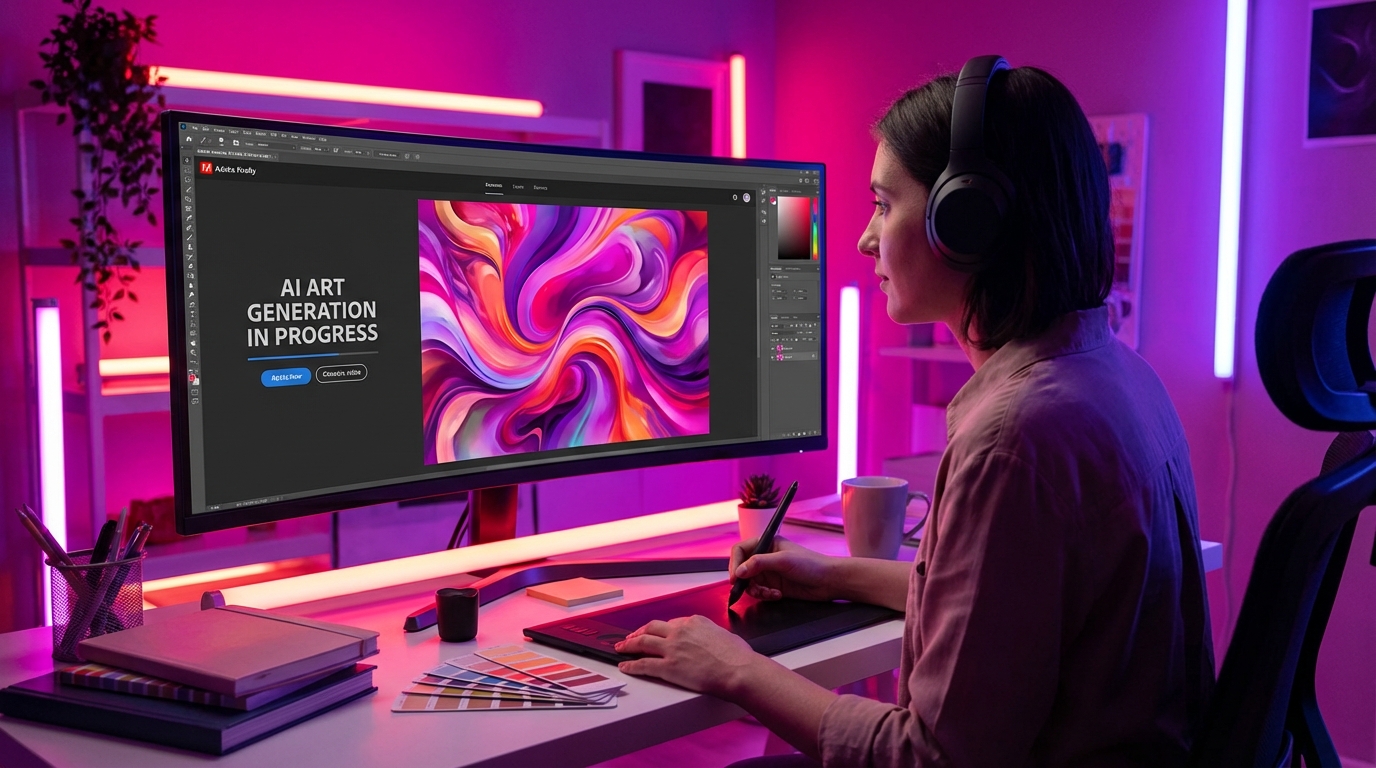
Adobe just opened up one of its most powerful AI capabilities to the public. Adobe Firefly Custom Models, previously available only to enterprise clients under a private beta, entered public beta in March 2026 — and it’s changing how brands think about AI-generated imagery. Instead of prompting a generic model and hoping for something on-brand, you can now train Firefly on your own visual assets and generate images that look like they belong in your marketing library from day one.
Here’s everything you need to know about what Custom Models are, how they work, and why this launch matters for designers, marketers, and creative teams.
What Are Adobe Firefly Custom Models?
Adobe Firefly Custom Models let you train a private version of Firefly’s image generation model on your own visual dataset — your product photos, brand photography, campaign imagery, design systems, or illustration styles. Once trained, the model generates new images that reflect your specific aesthetic, not just the generic Firefly aesthetic.
Think of it as the difference between asking a graphic designer who has never worked with your brand to create an ad, versus asking your in-house designer who has spent three years immersed in your brand guidelines. The output is fundamentally different — and fundamentally more useful.
Adobe is positioning Custom Models as the enterprise-grade answer to a problem that has plagued AI image generation since its inception: brand consistency. With standard models, even the best prompts can’t reliably reproduce your brand’s exact color palette, product rendering style, or photographic tone. Custom Models solve this by baking brand DNA directly into the model weights.

How the Training Process Works
The training pipeline for Firefly Custom Models is designed to be accessible to creative professionals, not just ML engineers. Here’s how it works in practice.
You start by uploading a curated set of images — Adobe recommends a minimum of 20 to 50 high-quality images that represent your brand’s visual style. These could be product shots, lifestyle photography, illustrations, or any visual content that captures your aesthetic. The more consistent and high-quality the training set, the better the output model will be.
Adobe then fine-tunes a version of Firefly on your dataset using its proprietary training infrastructure. The process typically takes several hours. Once complete, you get a private Custom Model that lives in your Adobe organization and can be accessed by authorized team members through Adobe Firefly, Adobe Express, and the Firefly API.
Crucially, Adobe has designed the system with intellectual property protections built in. Your training data stays private, the resulting model is exclusive to your organization, and Adobe does not use your custom model data to train its general Firefly models. This addresses one of the biggest concerns enterprise brands have had about AI image generation — losing control of proprietary visual assets.
What You Can Generate With Custom Models
Once your Custom Model is trained, the generation experience feels like Firefly — but filtered through your brand’s visual DNA. You can generate product images in new settings or contexts without a photoshoot. You can create campaign variations at scale without briefing a photographer. You can produce social media content that looks unmistakably like your brand without starting from scratch every time.
Adobe has also built a style strength slider that lets you control how strongly the Custom Model influences the output. At maximum strength, generated images will closely mirror your training data’s aesthetic. At lower settings, you get more creative freedom while retaining brand flavor. This flexibility is practical for teams that want on-brand defaults but occasional creative latitude.
Integration with Adobe Creative Cloud
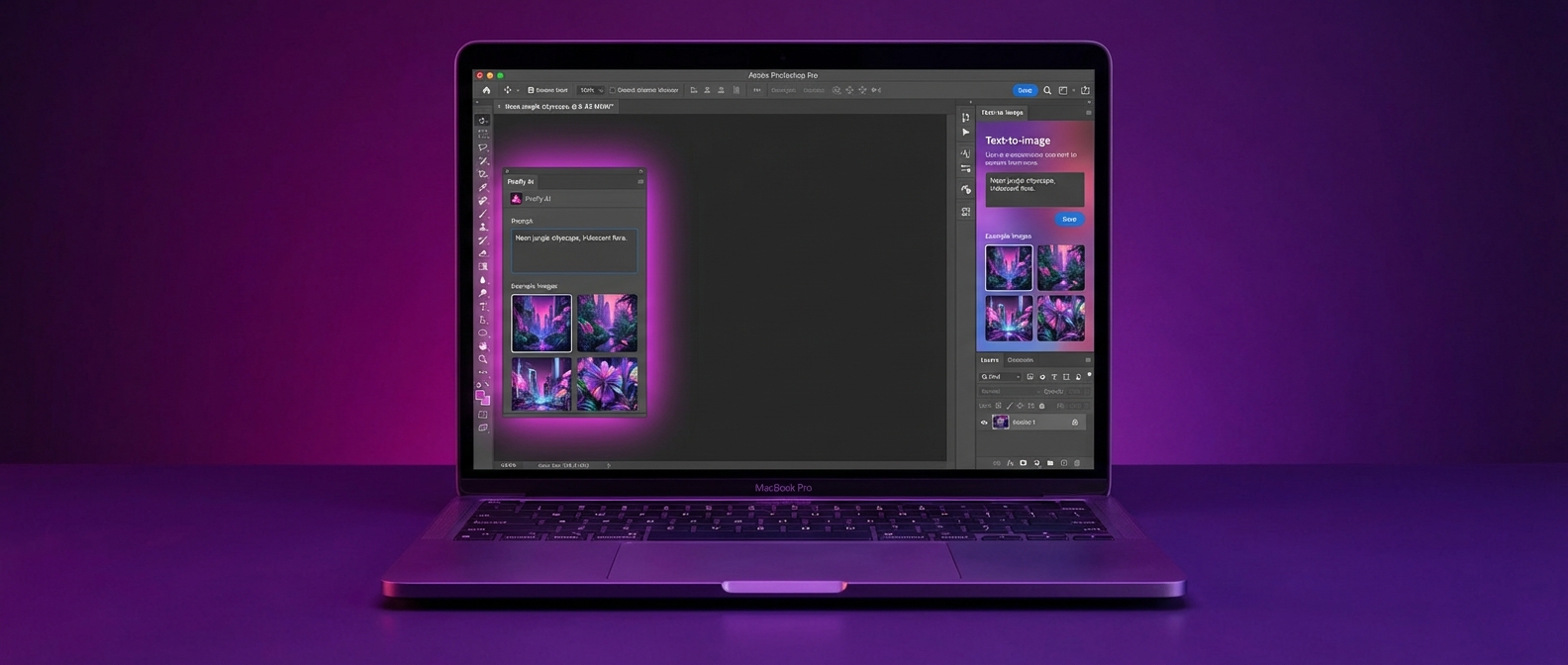
One of the strongest aspects of Firefly Custom Models is where they live. Because Firefly is natively integrated into Creative Cloud, your Custom Model is accessible directly inside Photoshop, Illustrator, Adobe Express, and Adobe GenStudio. You don’t have to export from one tool and import into another — the AI generation happens inside the tools your team already uses.
For enterprise teams using Adobe GenStudio, Custom Models become the generative backbone for on-brand content production at scale. Marketing teams can generate dozens of campaign variations for different markets, channels, and formats — all consistent with brand guidelines — without involving a designer for each iteration.
Pricing and Access
Adobe Firefly Custom Models are available in public beta for organizations with Creative Cloud for Teams and Creative Cloud for Enterprise plans. Pricing for Custom Model training is structured separately from standard Creative Cloud subscriptions and is based on the number of models trained and the volume of generation. Adobe has not published a standard price list for the public beta, but enterprise teams can request pricing through Adobe’s sales channels.
For smaller teams and individual creators, Adobe has indicated that more accessible pricing tiers are planned for later in 2026 as the product exits beta. This suggests the company sees Custom Models eventually becoming a standard feature across Creative Cloud plans, not just an enterprise add-on.
Why This Matters for the AI Creative Industry
Adobe Firefly Custom Models represent a significant maturation of AI image generation for professional use. The first wave of AI image tools — Midjourney, DALL-E, Stable Diffusion — were powerful but fundamentally general-purpose. They could produce stunning images, but keeping them on-brand required constant, expert prompting and significant curation effort.
Custom Models move the paradigm from “prompt engineering as a skill” to “brand-trained generation as infrastructure.” This is a fundamentally more scalable approach for organizations that produce high volumes of visual content.
Competitors are moving in the same direction — Google’s Imagen 3 has enterprise fine-tuning capabilities, and OpenAI has been quietly building custom model infrastructure for enterprise customers. But Adobe’s advantage is distribution: it already owns the tools that creative professionals and marketing teams live in every day. Embedding brand-trained AI into Photoshop and GenStudio gives Adobe a structural advantage that pure AI companies will struggle to replicate.
Final Thoughts
Adobe Firefly Custom Models entering public beta is a genuine milestone for AI-assisted creative work. The combination of brand-consistent generation, Creative Cloud integration, and enterprise-grade IP protections addresses the real barriers that have kept serious creative organizations from fully committing to AI image generation.
If you’re running a brand with a consistent visual identity and you produce a significant volume of creative assets, Firefly Custom Models deserve serious evaluation. The early access period is also an opportunity to build expertise before this becomes table stakes across the industry. Follow PickGearLab for updates as we track the full launch.





Leave a Reply