
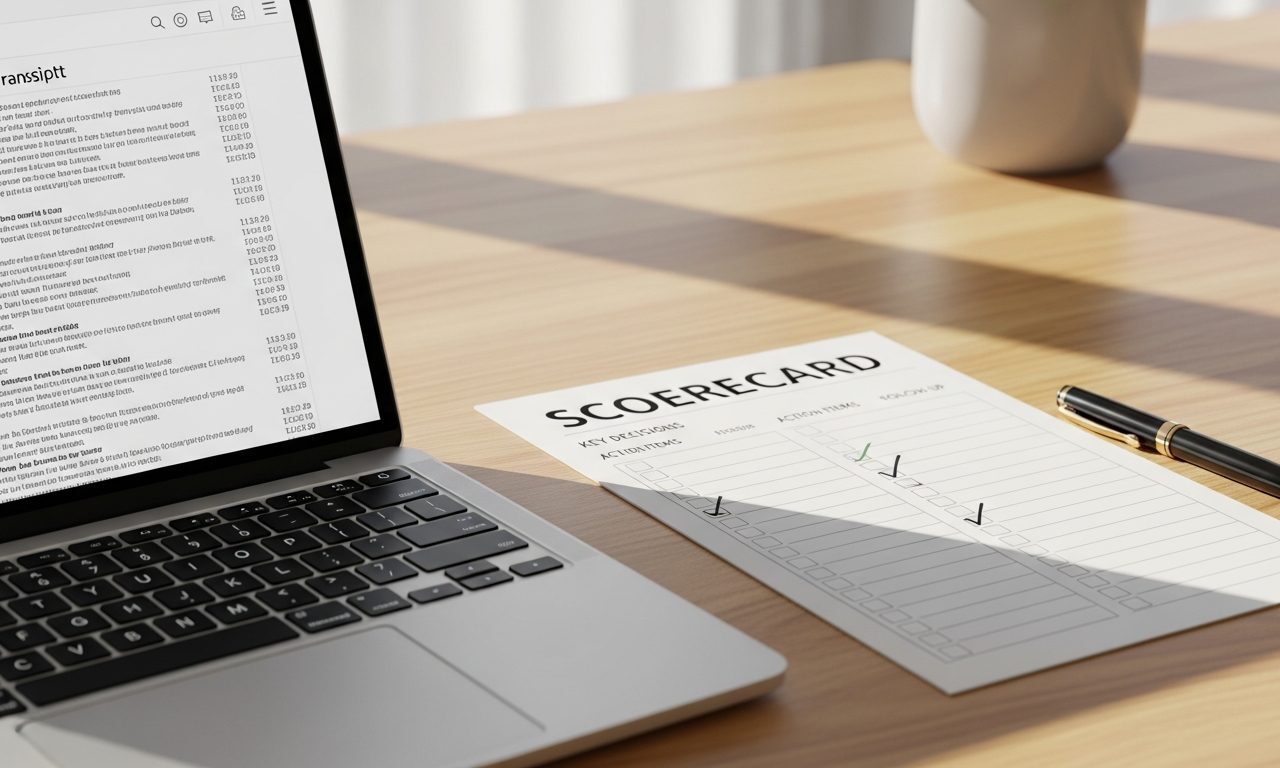
TL;DR: Record calls with Fathom (free tier is genuinely usable), export the transcript, and score it against MEDDPICC with a prompt that forces the model to quote evidence or mark the element unknown. The value is not the score — it is the list of things you cannot evidence, which becomes your next-call agenda.
The problem: your forecast is fiction
Every rep who has sat in a pipeline review knows the ritual. You say the deal is strong. Someone asks who the economic buyer is. You name your champion. Your manager asks whether that person can sign, and the answer is a paragraph rather than a name.
MEDDPICC exists to prevent this: Metrics, Economic buyer, Decision criteria, Decision process, Paper process, Identify pain, Champion, Competition. Organisations that adopt it properly report meaningfully higher win rates and larger deals. But the framework is only as honest as the person filling in the scorecard, and the person filling it in is the person whose commission depends on the answer.
Transcripts break that loop. They contain what was actually said, not what you remember being implied.
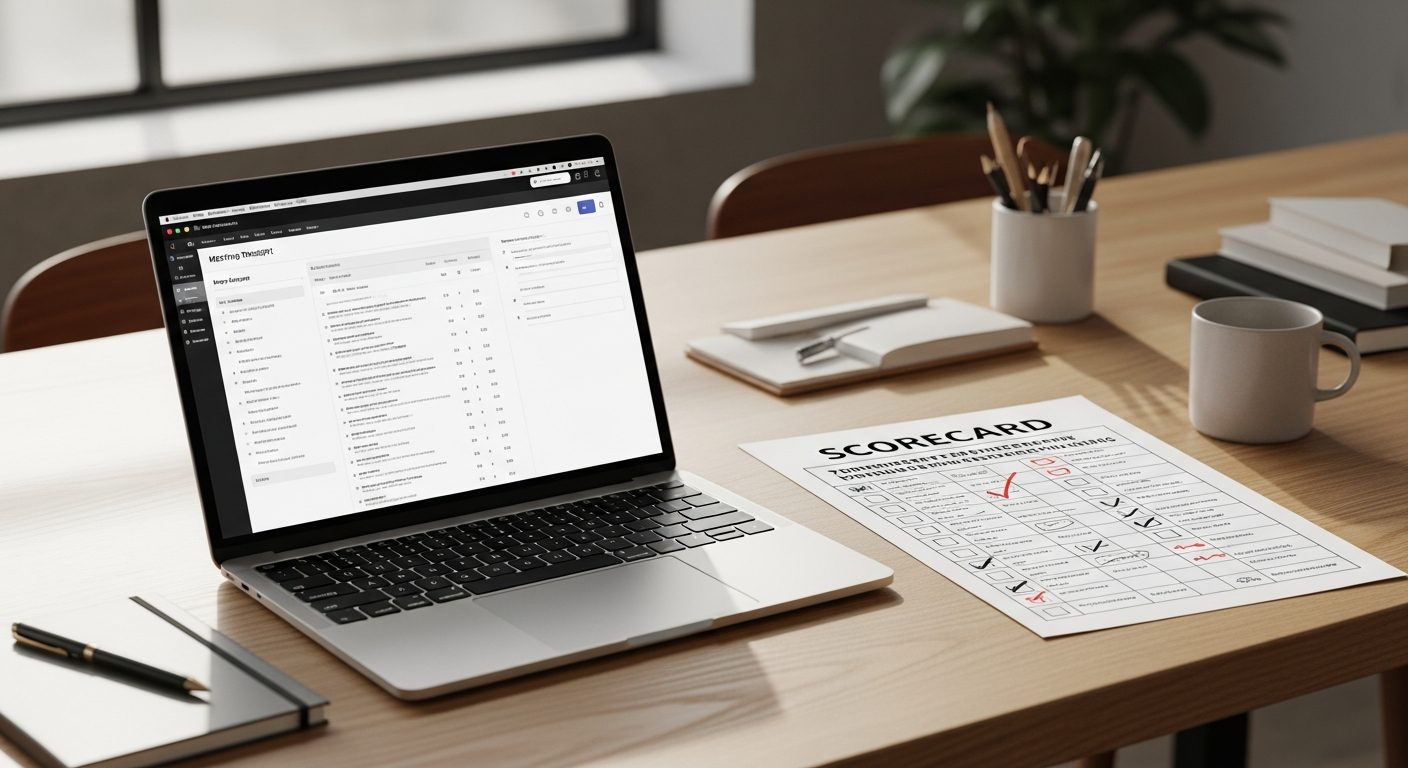
What you need
- A recorder. Fathom’s free tier gives unlimited recordings, which is remarkable for the category; paid tiers run roughly $15-20/user/month. Granola is the choice if you would rather not have a visible bot join. Gong is the enterprise answer at roughly $1,300-1,600 per user per year plus a platform fee — worth it above ~30 reps with dedicated enablement, hard to justify below that. I broke down the recorder choice in the Fathom vs Otter comparison.
- Claude or ChatGPT. Any current paid tier. Long transcripts favour Claude’s larger context window — see the long-document accuracy comparison.
- Consent. Recording law varies by jurisdiction and several are two-party consent. Announce the recording, get an audible yes, and never record a call you were told not to. This is not a formality.
Step 1: Get a clean transcript
Export the full transcript with speaker labels, not the AI summary. The summary has already thrown away the qualifying detail — the throwaway sentence where the buyer mentions their fiscal year end, or that legal review “usually takes about six weeks.”
For a multi-call deal, concatenate all transcripts into one file with clear headers (--- Call 2, 14 July, attendees: ... ---). Qualification is cumulative; scoring a single call underrates deals where the answer came up three weeks ago.
Step 2: The scoring prompt
This is the whole technique. The critical design choice is forcing quoted evidence, because a model asked to “score this deal” will happily produce a confident 7/10 out of thin air.
“You are a sceptical sales manager reviewing a deal. Below are transcripts from all calls on this opportunity.
Score each MEDDPICC element: Metrics, Economic Buyer, Decision Criteria, Decision Process, Paper Process, Identify Pain, Champion, Competition.
For each element output exactly four things:
1. STATUS: CONFIRMED (the customer stated it explicitly), INFERRED (I am reading between the lines), or UNKNOWN (never discussed).
2. EVIDENCE: a direct verbatim quote from the transcript with the speaker’s name. If there is no quote, write NONE and you must mark the status UNKNOWN.
3. GAP: what specifically is still missing.
4. NEXT QUESTION: the exact question I should ask, phrased as I would say it on a call.Rules: never mark CONFIRMED without a verbatim quote. Do not be generous. If I claimed something but the customer never confirmed it, that is INFERRED at best. At the end, list the three elements most likely to kill this deal and explain why.”
The “NONE means UNKNOWN” constraint is what makes the output trustworthy. Without it you get plausible narrative; with it you get an audit.
Step 3: Read the UNKNOWNs, ignore the score
Do not fixate on how many elements came back confirmed. The actionable output is the UNKNOWN list, and in my experience the same two elements dominate it:
- Paper process. Almost nobody asks. Then a signed deal sits in legal for seven weeks and the quarter closes without it. In enterprise telecom, where contracts touch procurement, legal, security review and sometimes regulatory sign-off, this is routinely the single biggest slip risk.
- Economic buyer. Reps consistently promote their champion to economic buyer because the champion is the person being nice to them. The transcript test is simple: did anyone say this person approves the budget, or did you assume it?
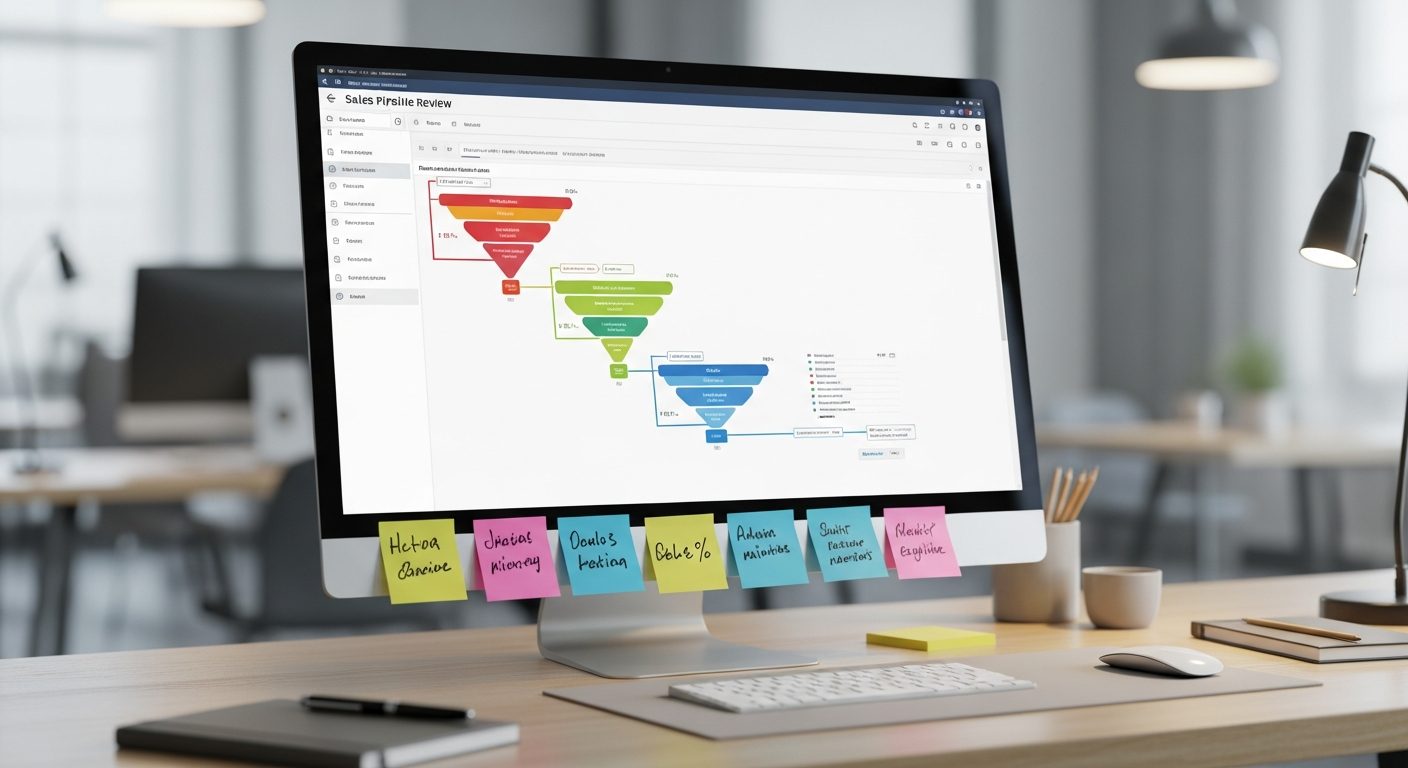
What the output actually looks like
An abbreviated real example, from a deal that felt strong going into a forecast review:
IDENTIFY PAIN — CONFIRMED. Evidence: “We’ve had three outages this year at the Manchester site and each one costs us about a day of production.” (Operations Director). Gap: none material. Next question: none.
ECONOMIC BUYER — UNKNOWN. Evidence: NONE. Gap: no one has stated who approves spend at this level. The rep referred to the IT Director as “the decision maker” but the IT Director never confirmed budget authority and twice used the phrase “if we get sign-off.” Next question: “When you’ve bought something like this before, who else had to put their name to it?”
PAPER PROCESS — UNKNOWN. Evidence: NONE. Gap: never discussed at any point across four calls. Next question: “Once we agree commercially, what does your side’s paperwork look like — who reviews, and roughly how long does that usually take?”
COMPETITION — INFERRED. Evidence: “We’re speaking to a couple of people about this.” (IT Director). Gap: no idea who, or what criteria they are being measured against. Next question: “Totally fair that you’re looking at options — what are the others doing well that we’d need to match?”
Three of the four are unknown or inferred, on a deal the rep had at 80% and committed to the quarter. Nothing here is clever. It is just the difference between what was remembered and what was said — and the phrase “if we get sign-off,” which the rep heard twice and did not register, is the entire deal risk in five words.
Step 4: Turn gaps into a call plan
Chain a second prompt:
“Based on the UNKNOWN and INFERRED elements above, write an agenda for my next call. Sequence the questions so the easy ones build permission for the harder ones — do not open with budget authority. For each question add a one-line reason I can say aloud explaining why I am asking, so it lands as diligence rather than interrogation.”
That last instruction matters more than it sounds. “Who signs this?” is abrasive. “So I can make sure we don’t waste your time on an approach that won’t clear procurement — how does a purchase like this normally get approved here?” is a consultant asking a reasonable question.
Step 5: Run it as a cadence, not a one-off
Score every deal above your threshold value at two fixed points: after the second substantive call, and before you commit it to forecast. Ten minutes each. Keep the outputs in one document per opportunity so you can see qualification improving or stalling over time — a deal whose UNKNOWNs have not moved in three weeks is not progressing regardless of how good the meetings feel.
If you want the scoring to run automatically when a transcript lands, that is a straightforward automation — recorder webhook, LLM step, write to your CRM or a doc. The n8n vs Zapier vs Make comparison covers picking the platform; the prompt above is the payload.
What AI gets wrong here
- It over-reads politeness. Buyers say “this looks great” as social lubricant. Models score it as confirmed pain or champion enthusiasm. This is why the prompt demands the customer stated it, not that the tone was warm.
- It cannot see the room. Who went quiet when pricing came up, who was not invited, whose calendar was impossible to get — the most diagnostic signals in enterprise deals are absences, and transcripts contain no absences.
- Transcription errors on names and products. Vendor names, acronyms and site codes get mangled. Skim before trusting a competitive read.
- It flatters multi-call deals. More text means more chances to find a quote that looks like confirmation. Re-read the quotes it cites; roughly one in five will not support the claim.
Used honestly, this does one narrow thing very well: it stops you from believing your own optimism. The proposal you build afterwards is only as good as the qualification underneath it — next step is turning the discovery call into a tailored proposal.
About the author
Shahid Saleem is the founder and editor of PickGearLab. He tests AI tools in the real world – writing, automation, content – and writes up what actually worked. Based in Dubai.
New workflows, straight to your inbox.
Workflows like this one, as they are published. Free. Unsubscribe in one click.
Subscribe free →