For years, Microsoft and OpenAI have been among technology’s most intertwined partnerships. Microsoft’s multi-billion-dollar investment bankrolled OpenAI’s explosive growth, while OpenAI’s models powered Microsoft’s most ambitious products — from the revamped Bing to GitHub Copilot to the entire Azure OpenAI Service. But the AI industry rarely stays still, and April 2026 is proving that point dramatically.
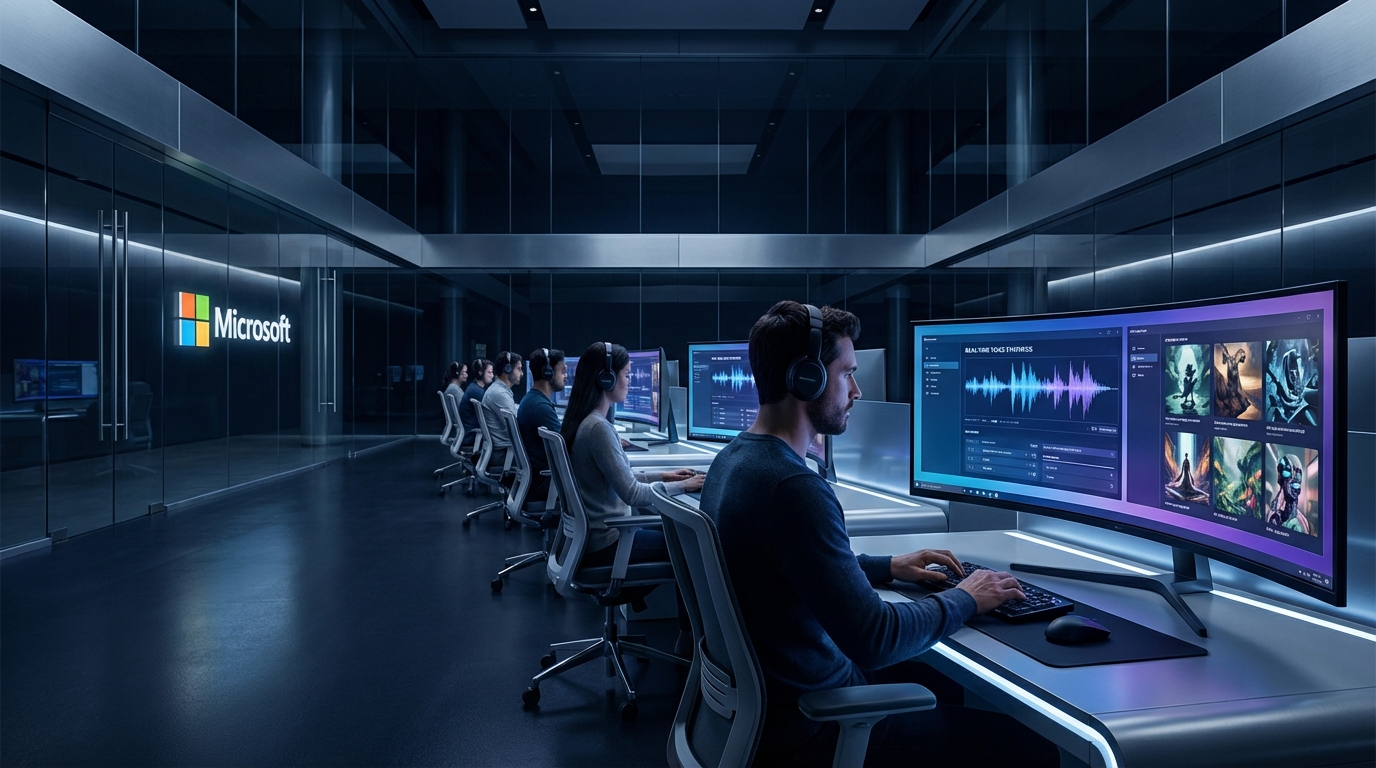
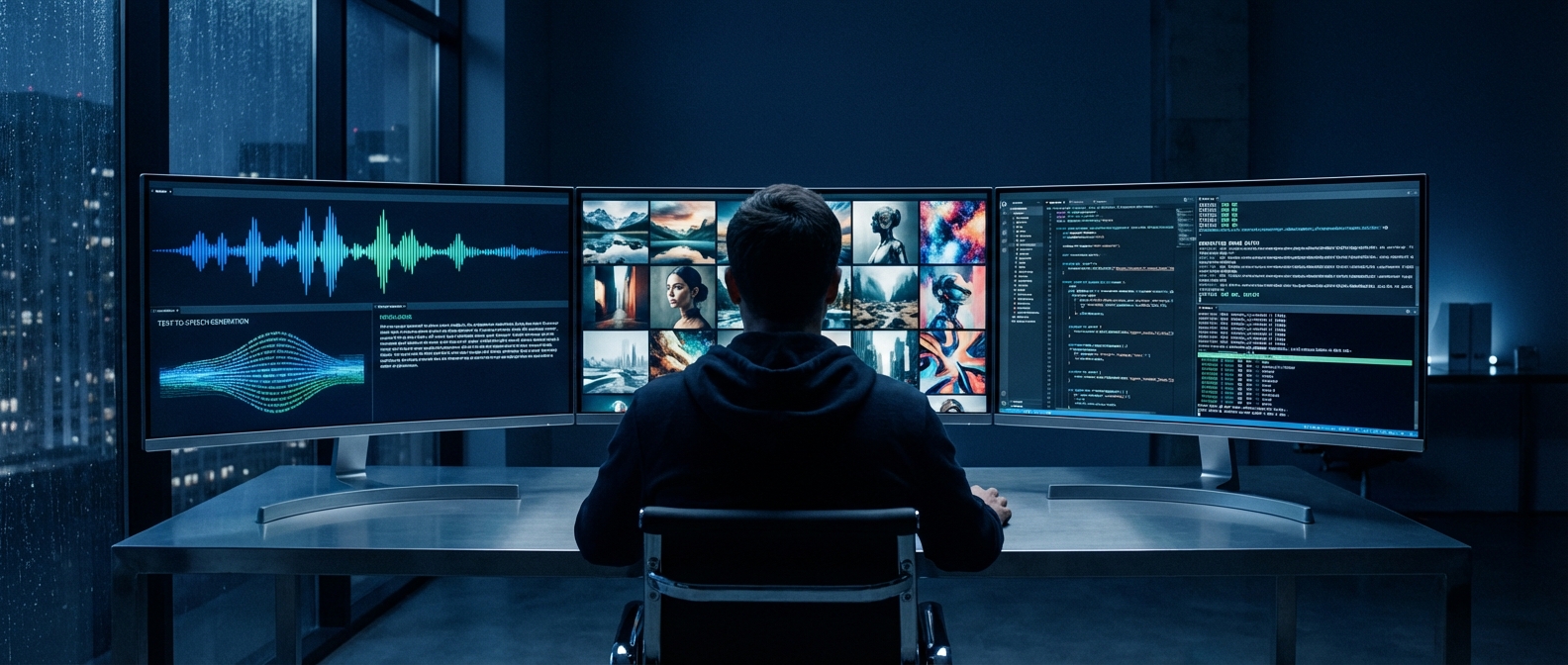
On April 2, Microsoft officially launched three powerful in-house AI models under its new MAI brand, available directly in Microsoft AI Foundry. The three models — MAI-Transcribe-1 for speech recognition, MAI-Voice-1 for text-to-speech generation, and MAI-Image-2 for AI image creation — represent Microsoft’s most assertive step toward AI self-sufficiency. Early benchmarks are striking: in several tests, these in-house models outperform their OpenAI counterparts. And they do it at reportedly 80% lower cost.
This launch is not just a product announcement. It is a statement about where Microsoft sees itself in the next chapter of the AI era — and it signals a fundamental shift in the competitive landscape that every developer, enterprise buyer, and AI investor needs to understand.
What Are the Three New MAI Models?
Microsoft has been quietly building its own AI research division, and the MAI brand is the first major public expression of that work. The three models launched on April 2 cover three of the most commercially important AI modalities in use today: speech-to-text, text-to-speech, and image generation — chosen precisely because they represent high-value, high-volume enterprise workloads where OpenAI currently commands a significant revenue share.
MAI-Transcribe-1 targets the booming market for automatic speech recognition. MAI-Voice-1 enters the competitive field of neural text-to-speech synthesis. MAI-Image-2 takes on AI image generation, where OpenAI’s DALL-E series has long been the enterprise default. All three are accessible through Microsoft AI Foundry, the unified developer platform the company launched in late 2025, which gives developers a single API gateway into Microsoft’s full model catalog alongside curated third-party options.
MAI-Transcribe-1: The Speech Recognition Model That Beats OpenAI Whisper
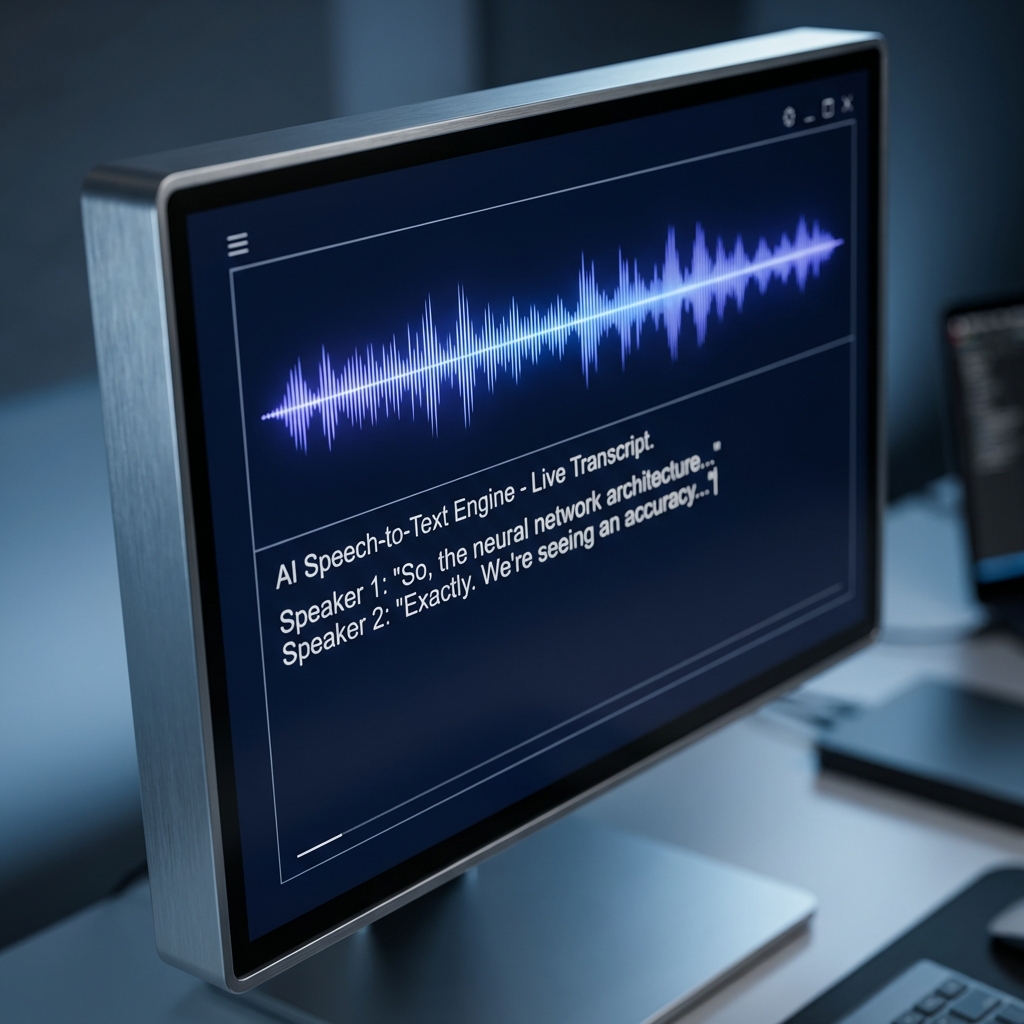
MAI-Transcribe-1 is arguably the most technically impressive of the three. Microsoft’s benchmarks show it achieves a word error rate of just 3.8% across standard evaluation datasets — a result that outperforms OpenAI’s Whisper model across 25 different languages. Word error rate measures the percentage of words a transcription system gets wrong; lower numbers mean better accuracy.
For enterprise customers, this precision gap has real consequences. Teams using ASR for meeting transcription, call center quality analysis, legal documentation, or medical dictation need models that maintain accuracy across diverse accents, speaking speeds, technical vocabulary, and noise conditions. MAI-Transcribe-1’s multilingual performance — reportedly besting prior state-of-the-art results in languages including Spanish, Hindi, Japanese, and Arabic — makes it a credible global solution rather than an English-centric tool that struggles at the edges.
Latency is the other headline number. Microsoft reports that MAI-Transcribe-1 processes audio approximately 40% faster than comparable ASR models at equivalent accuracy levels, enabling near-real-time transcription even for high-frequency production workloads. The model integrates directly with Azure Cognitive Services, Microsoft Teams, and Foundry’s REST API, meaning development teams can switch from existing ASR providers with minimal code changes. For organizations running hundreds of thousands of transcription minutes per month, the combination of better accuracy and lower cost creates an immediate and compelling economic case.
MAI-Voice-1: Human-Quality Text-to-Speech for Any Developer
MAI-Voice-1 addresses text-to-speech synthesis with a focus on the quality characteristic that most TTS systems still struggle with: prosody. Prosody encompasses the rhythm, stress, intonation, and pacing that distinguish natural human speech from the flat, robotic cadence that has historically plagued synthetic voice. Microsoft’s mean opinion score evaluations rate MAI-Voice-1 above competitor offerings on naturalness, with independent listener tests confirming the gap is perceptible even to non-technical audiences.
The model supports over 60 languages and more than 300 distinct voice personas, with fine-tuning options for speaking speed, pitch range, and emotional register. Enterprise customers can create branded voices — consistent synthetic speakers that carry a company’s audio identity across products, customer support systems, and media content. That capability has particular appeal for e-learning platforms, audiobook production, digital assistants, and customer experience applications where voice consistency matters as much as voice quality.
One technically notable achievement is MAI-Voice-1’s performance on long-form content. Most TTS models degrade in prosodic coherence when asked to synthesize extended passages — losing appropriate pacing, emphasis, and intonation across paragraphs or minutes of continuous speech. Microsoft’s model reportedly maintains consistent naturalness across content as long as full-length audiobooks, a benchmark that prior generation systems have routinely failed.
MAI-Image-2: Taking On DALL-E 3 and the Enterprise Image Generation Market
MAI-Image-2 enters the most competitive of the three spaces but does so with a distinctly enterprise-first design philosophy. Where consumer-facing models like Midjourney emphasize artistic experimentation and aesthetic novelty, MAI-Image-2 is engineered for consistent, controllable, commercially safe image production at scale — the properties that actually matter when a Fortune 500 company is generating product imagery, marketing assets, or documentation visuals through an automated pipeline.
The model supports text-to-image generation, image editing, inpainting, outpainting, and style transfer. Critically, it includes built-in content filtering and copyright-avoidance mechanisms designed to meet enterprise compliance requirements without additional configuration — a persistent concern for large organizations that need to deploy AI-generated imagery without legal exposure. Microsoft has also invested in image provenance and watermarking capabilities, allowing organizations to track the origin of AI-generated assets through their content lifecycle.
Early independent comparisons suggest MAI-Image-2 produces photorealistic results competitive with DALL-E 3, though some creative and abstract stylistic tasks still favor OpenAI’s model. Where MAI-Image-2 consistently pulls ahead is in API reliability, throughput at scale, processing latency, and native integration with Microsoft 365, Power Platform, and Teams — advantages that matter enormously when image generation is embedded in automated enterprise workflows rather than used interactively by creative teams.
Why Microsoft Is Building Its Own AI Models Now
The timing and scope of this launch raises a question that every observer of the AI industry is asking: why is Microsoft building its own AI models now, when its OpenAI partnership remains one of the most valuable and visible in tech?
The answer is strategic resilience. Microsoft’s OpenAI relationship remains commercially valuable, but it also creates meaningful dependency risks that are growing rather than shrinking. OpenAI’s March 2026 funding round at an $852 billion valuation signals a company with the resources and ambition to build its own consumer and enterprise products — including a new ChatGPT super app announced alongside the funding — that will compete directly with Microsoft’s offerings. The two companies remain Azure partners, but the competitive dynamics are increasingly layered and complex.
Building proprietary MAI models gives Microsoft several things at once: lower-cost AI capabilities it can offer Azure customers without OpenAI’s margin requirements; genuine negotiating leverage in the ongoing commercial relationship; and the ability to move fast in high-value verticals where OpenAI has not invested deeply. Speech, voice synthesis, and enterprise image generation are all areas that have not been OpenAI’s primary research frontier — making them natural places for Microsoft to establish first-party capability without triggering direct conflict.
There is also a talent signal embedded in this launch. Microsoft’s AI research organization has expanded significantly in the past two years, and the MAI models are a public proof of concept that it can produce results at the frontier — not just integrate and distribute other companies’ work. That signal matters for recruiting, for investor confidence, and for the long-term credibility of Microsoft’s AI platform strategy.
What Developers and Enterprises Should Do Now
For teams already using Azure, the path to evaluating the MAI models is straightforward. All three are accessible through Foundry using existing SDK authentication and follow the same API conventions as the rest of the model catalog. Microsoft is publishing benchmark comparison tools, quickstart guides, and migration templates designed to minimize the friction of testing MAI-Transcribe-1 against an existing ASR provider or switching a TTS pipeline from a competitor.
The pricing case is compelling enough to warrant evaluation even for teams that are currently satisfied with their existing solutions. At 80% lower cost than comparable OpenAI APIs for high-volume workloads, the math can justify a migration even when the quality difference is modest. For organizations running speech transcription or voice generation at enterprise scale, the savings are not incremental — they are structural.
The broader lesson from Microsoft’s MAI launch is one about the structure of the AI market in 2026. The era of a two-player AI model market is ending. Hyperscalers are investing seriously in first-party model capabilities. Specialized providers are carving out defensible positions in specific modalities. And enterprise buyers now have more options, more pricing leverage, and more architectural flexibility than at any previous point in the AI wave. Microsoft’s move accelerates all three trends — and that is good news for everyone building with AI.