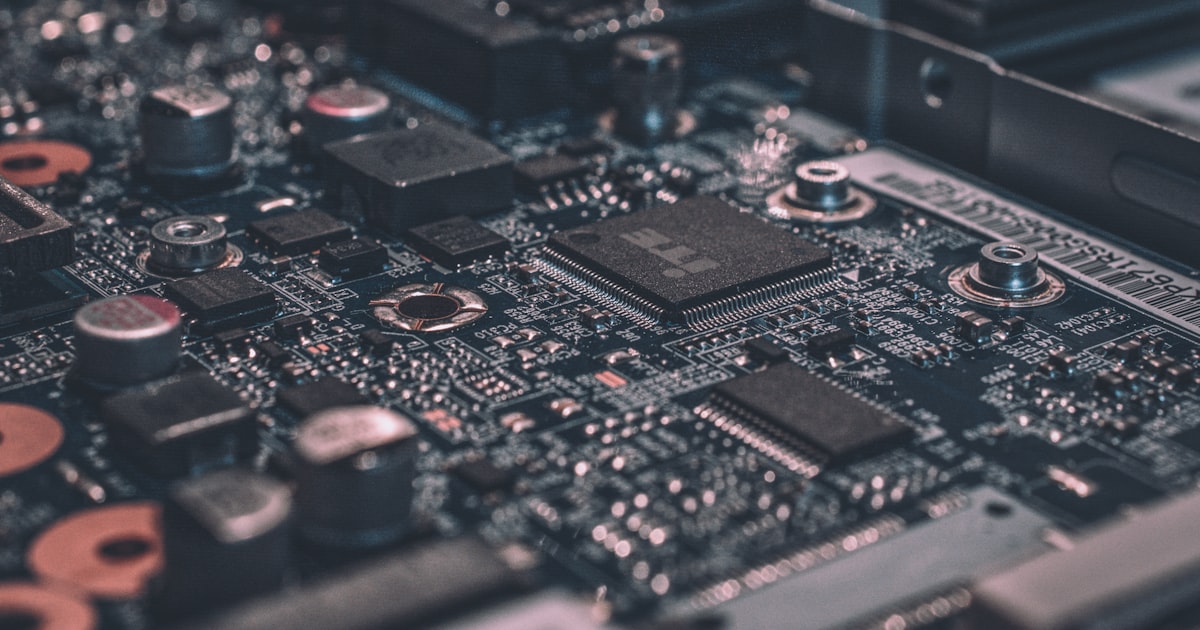
Wall Street has spoken — and it’s bullish on silicon. In a sweeping new analysis released this week, Goldman Sachs delivered a forecast already reverberating through boardrooms, semiconductor fabs, and data centers worldwide: artificial intelligence demand will drive a staggering 49% surge in global semiconductor revenues by the end of 2026, with AI-related hardware revenues poised to cross the $700 billion mark in the final quarter of the year. For an industry that has weathered boom-and-bust cycles for decades, this projection represents something altogether different — a structural, demand-driven transformation with no clear ceiling in sight.
This isn’t speculative hype. It’s a data-backed forecast built on concrete signals: Taiwan’s AI hardware shipments hit $44.6 billion in February alone, US AI-related investment now represents 1.1% of GDP, and enterprise AI adoption rates are accelerating at a pace that few analysts predicted even eighteen months ago. The semiconductor supercycle, it turns out, is just getting started.
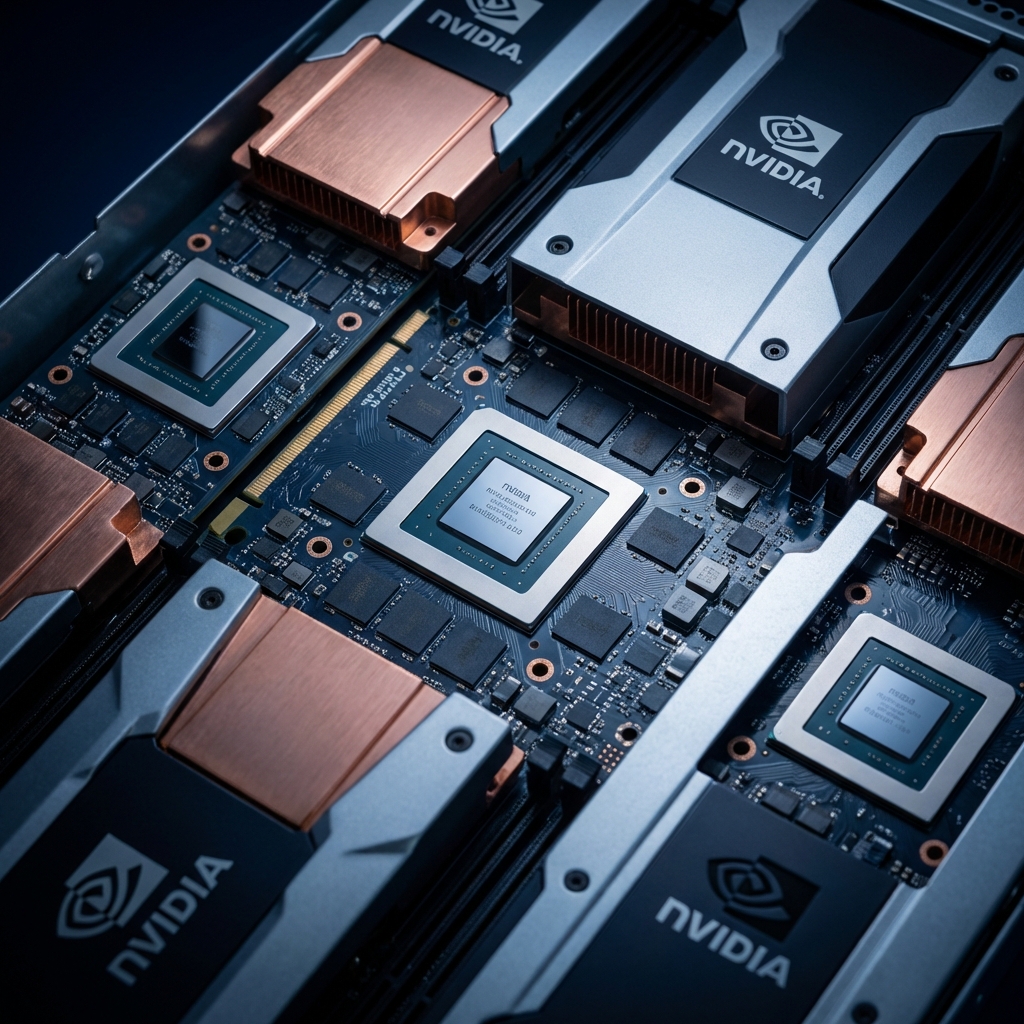
Breaking Down the $700 Billion Projection
Goldman Sachs’ research team put a number on the AI hardware boom that is difficult to comprehend in the abstract: over $700 billion in AI-related hardware revenues in Q4 2026 alone. To put that figure in context, the entire global semiconductor market generated roughly $527 billion in revenues in 2023. Goldman Sachs is effectively predicting that AI hardware spending in a single quarter will surpass what the whole industry produced in a year just three years ago.
The 49% revenue growth figure represents a compound acceleration that few financial analysts were willing to put on paper eighteen months ago. The drivers are well understood at this point — data center expansion, GPU clusters for training frontier AI models, inference-optimized chips for deployment at scale — but Goldman’s analysis adds a critical layer of nuance: this growth is no longer concentrated solely in hyperscalers. Mid-market enterprises and sovereign AI infrastructure programs are now adding meaningful demand on top of the CapEx titans at Amazon, Microsoft, Google, and Meta.
Taiwan’s semiconductor ecosystem sits at the heart of this story. AI-related hardware shipments from the island nation reached $44.6 billion in February 2026, a number that reflects both TSMC’s advanced packaging leadership and the broader Taiwanese supply chain that feeds global AI hardware production. That single monthly figure underscores just how profoundly the geography of the AI economy is being shaped by chip manufacturing capacity.
The Data Center Construction Boom Behind the Numbers
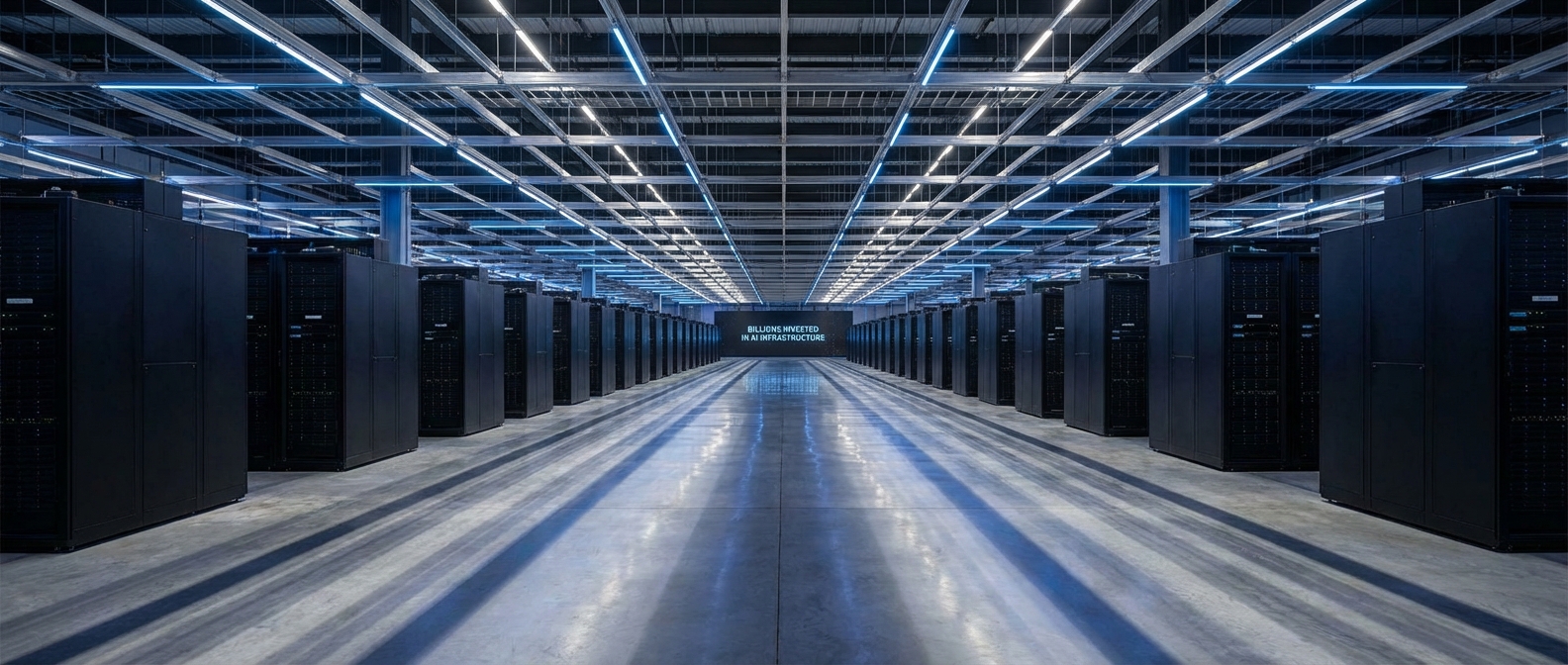
Before a single AI model can run an inference query, somebody has to pour concrete and pull cable. The Goldman Sachs report drew attention to a figure that deserves far more coverage than it has received: 212,000 construction jobs have been created in the United States since 2022 directly tied to data center buildout. That’s a quarter of a million skilled workers employed not in software, not in AI research, but in the physical infrastructure that makes artificial intelligence possible.
This construction wave is unfolding at scale across Northern Virginia, Iowa, Texas, Georgia, and increasingly in international markets from Malaysia to Saudi Arabia. Hyperscalers are committing to capital expenditure plans measured in the tens of billions annually, and those commitments are translating into real poured-concrete, rack-mounted, power-hungry facilities that will need to be staffed, cooled, and continuously upgraded for years to come.
The Goldman report is careful to note that the labor market effects of AI remain net positive in the current phase. Only 4,600 workers reported AI-related layoffs in February 2026 — a number dwarfed by the 212,000 construction jobs created. In the current phase of the buildout cycle, the hardware side of the AI economy is creating far more jobs than the software side is displacing.
How America’s AI Investment Is Rewriting GDP
Goldman Sachs provided a striking macroeconomic anchor for its semiconductor forecast: US AI-related investment now stands at $325 billion — 1.1% of GDP — above its 2022 baseline. That single statistic tells you everything about how rapidly artificial intelligence has moved from a research curiosity to a primary driver of economic activity in the United States.
For comparison, the US internet infrastructure buildout of the late 1990s peaked at roughly 0.8% of GDP in investment terms before the bubble burst. The current AI investment cycle has already surpassed that threshold, and unlike the late-90s fiber glut, the underlying demand signal this time around is proving durable. Enterprises aren’t investing in AI because they fear missing out — they’re investing because early adopters are reporting tangible, measurable productivity gains showing up in quarterly results.
The investment is also notably more distributed across the supply chain than prior technology cycles. Capital is flowing simultaneously into foundry capacity, advanced packaging, high-bandwidth memory, networking silicon, power infrastructure, and cooling technology. This diversified demand profile makes the current semiconductor supercycle more resilient to single-point disruptions than any prior hardware boom.
AI Adoption: Who’s Leading, Who’s Lagging
The Goldman analysis included a granular look at enterprise AI adoption that tells a story of accelerating mainstream diffusion. As of the report date, 18.9% of US establishments are actively using AI in their operations. Within six months, that number is expected to climb to 22.3% — roughly a 3.4 percentage-point increase in under half a year.
The adoption curve is particularly steep among larger organizations. Firms with 250 or more employees report current AI adoption rates of 35.3%, a figure that suggests large enterprises have largely crossed the Rubicon from experimentation to operational deployment. The gap between large and small firm adoption is significant, but historical technology diffusion patterns suggest it will narrow rapidly as tooling becomes more accessible and upskilling becomes cheaper.
Sector variation is equally telling. Industries with high data density and clear productivity metrics — financial services, healthcare informatics, logistics and supply chain, legal tech — are leading the charge. More labor-intensive sectors with lower data infrastructure are adopting more slowly, though Goldman analysts noted accelerating interest from retail, manufacturing, and construction as AI tools become more domain-specific and require less technical integration overhead to deploy.
The Productivity Signal Investors Cannot Ignore
Goldman Sachs backed its semiconductor forecast with productivity data that gives the investment thesis its fundamental foundation. Academic studies surveyed in the report show an average productivity uplift of 23% from AI adoption across knowledge worker tasks. Company-reported figures are even more striking — enterprises reporting productivity improvements are citing roughly 33% efficiency gains on average.
These numbers matter enormously for the semiconductor demand forecast because they answer the skeptic’s core question: is AI spending translating into real economic value, or is it a CapEx bubble waiting to deflate? A 23–33% productivity improvement in knowledge work is not marginal. Applied across the roughly 100 million knowledge workers in the US economy, even a conservative realization of those gains would represent trillions of dollars in economic value — a figure that more than justifies continued hardware investment at current levels.
The productivity gains are also self-reinforcing in their effect on semiconductor demand. As enterprises realize ROI from AI deployment, they reinvest in expanded AI infrastructure. As that infrastructure scales, model quality improves, which creates new use cases, which drives new adoption, which generates new demand for chips. Goldman’s analysts refer to this as a “demand compounding” dynamic — the structural feature that separates the current cycle from prior technology investment booms.
What This Means for Investors, Developers, and Decision-Makers
Goldman Sachs’ forecast arrives at a moment when semiconductor stocks are navigating genuine complexity — export control tightening, geopolitical tension in the Taiwan Strait, and the ongoing competition between US and Chinese chip ecosystems. Against that backdrop, a 49% revenue surge projection is both an extraordinary validation of the AI hardware thesis and a reminder that the path to $700 billion will not be a smooth linear climb.
For investors, the report represents a fundamental case for sustained exposure to the AI semiconductor ecosystem — advanced logic (TSMC, ASML, Applied Materials), high-bandwidth memory (SK Hynix, Samsung, Micron), and networking silicon (Broadcom, Marvell, Arista Networks). The data center construction boom adds a secondary layer of opportunity in power infrastructure, cooling technology, and industrial automation.
For technology leaders and enterprise decision-makers, the Goldman analysis provides a useful benchmark: if you’re among the 81% of US establishments not yet actively using AI, the organizations gaining competitive leverage are doing so right now. The productivity gap between AI-enabled enterprises and laggards will not wait for a convenient time to widen. The semiconductor story of 2026 is ultimately a mirror of the broader AI economy — massive, accelerating, and still in the early chapters of what Goldman Sachs is betting will be one of the most consequential industrial buildouts in modern economic history. At $700 billion and counting, the silicon foundation of artificial intelligence is being laid in real time.