
Disclosure: Some links in this post are affiliate links. If you sign up, PickGearLab may earn a commission at no extra cost to you. We only recommend tools we actually use.
You’ve spent two hours writing a 1,500-word blog post. Good. Now ask yourself: how many of your readers actually prefer audio?
According to Edison Research, 42% of Americans listen to podcasts monthly. That same content you just wrote could reach a completely different audience — without you recording a single word.
Here’s the workflow I use every Monday after I publish my article.
What you need
- ElevenLabs — AI voice synthesis (the key tool in this workflow)
- Your existing blog posts (any format)
- A podcast host (Buzzsprout, Spotify for Podcasters, or RSS.com)
- Optional: Kit (ConvertKit) or Beehiiv to distribute episodes via email
Step 1: Clean your blog post for audio
Not everything that reads well, sounds well. Before converting, make these quick edits:
- Remove or rewrite bullet points — turn them into short sentences
- Replace links with verbal references (“I’ll link this in the show notes”)
- Remove tables — convert key data to spoken comparisons
- Add a short intro: “Today I’m talking about X — here’s what you’ll get from this episode”
This takes about 5 minutes for a 1,500-word post.
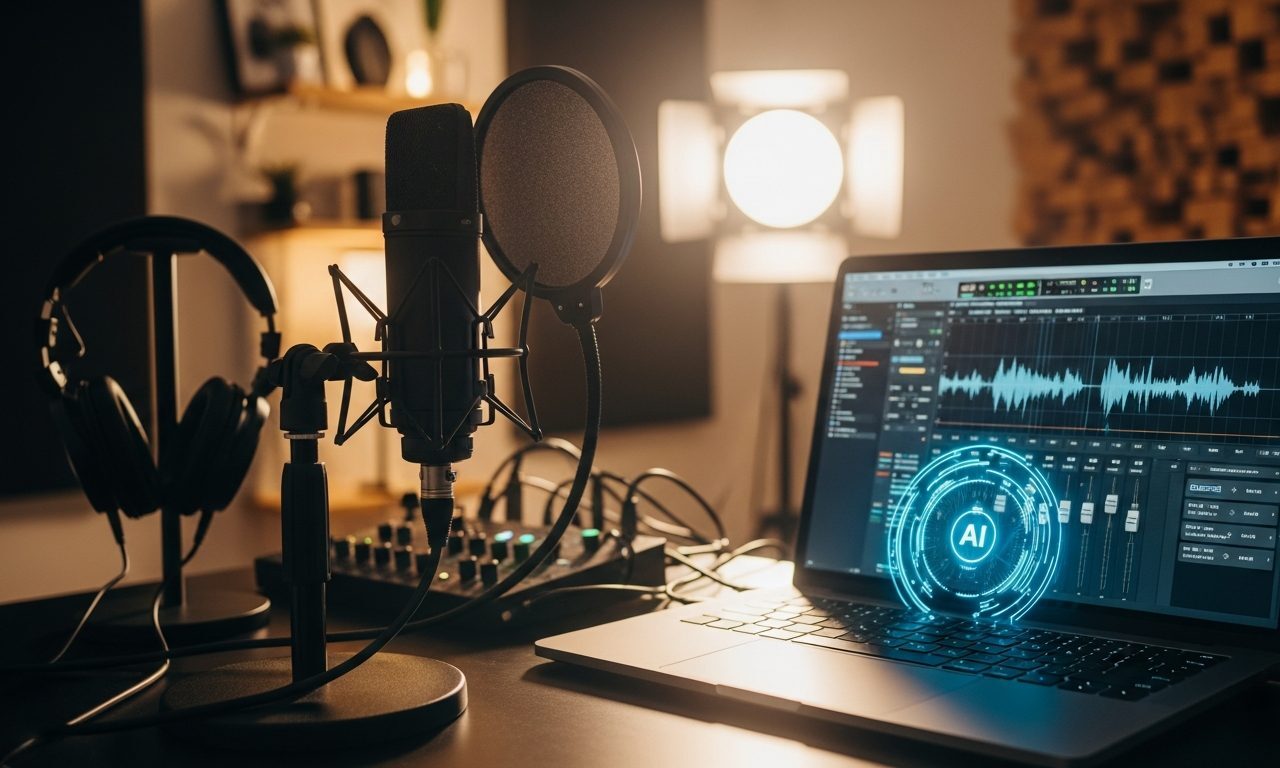
Step 2: Generate the voice with ElevenLabs
Go to ElevenLabs and sign up if you haven’t. The free tier gives you 10,000 characters per month — enough to test the workflow before committing.
Here’s how I set it up:
- Create a custom voice clone from your own recordings (2 minutes of clean audio is enough)
- Paste your cleaned text into the Speech Synthesis tab
- Set stability to 70% and similarity to 75% — this sounds most natural for long-form content
- Generate and download the MP3
The voice quality is genuinely impressive. I’ve had readers tell me they didn’t realise it was AI — they thought I’d started recording podcasts.
Step 3: Add intro/outro music
Even a 10-second piece of royalty-free music at the start and end makes it feel like a real podcast. I use Pixabay Music (free, commercial use allowed) — search “tech ambient” or “minimal corporate”.
Combine the files in Audacity (free) or just use ElevenLabs‘s built-in projects feature if you’re on a paid plan.

Step 4: Distribute via email and RSS
Upload to your podcast host to get an RSS feed. Then:
- If you use Kit (ConvertKit): create an email broadcast with an embedded audio player using a simple HTML block
- If you use Beehiiv: use the native audio embed in the post editor — Beehiiv handles this beautifully
Your email subscribers can listen without leaving their inbox. Your podcast goes out on Spotify and Apple Podcasts via the RSS feed. Same content. Two audiences.
What this costs
ElevenLabs‘s Starter plan ($5/month) gives you 30,000 characters — roughly 4-5 episodes per month. Creator plan ($22/month) covers most serious creators with 100,000 characters and instant voice cloning.
For the output you get — a professional-sounding podcast episode from your existing writing — it’s one of the best ROI tools in my stack.
The honest limitation
AI voices still struggle slightly with unusual proper nouns and very technical terms. Build in 5 minutes to spot-check the generated audio before publishing. In my experience, about 1 in 20 episodes needs a single word re-generated.
Related reading
About the author
Shahid Saleem is the founder and editor of PickGearLab. He tests AI tools in the real world — writing, automation, content — and writes up what actually worked. Based in Dubai.
One practical AI tutorial. Every Monday.
Workflows like this one — straight to your inbox. Free. Unsubscribe in one click.
Subscribe free →