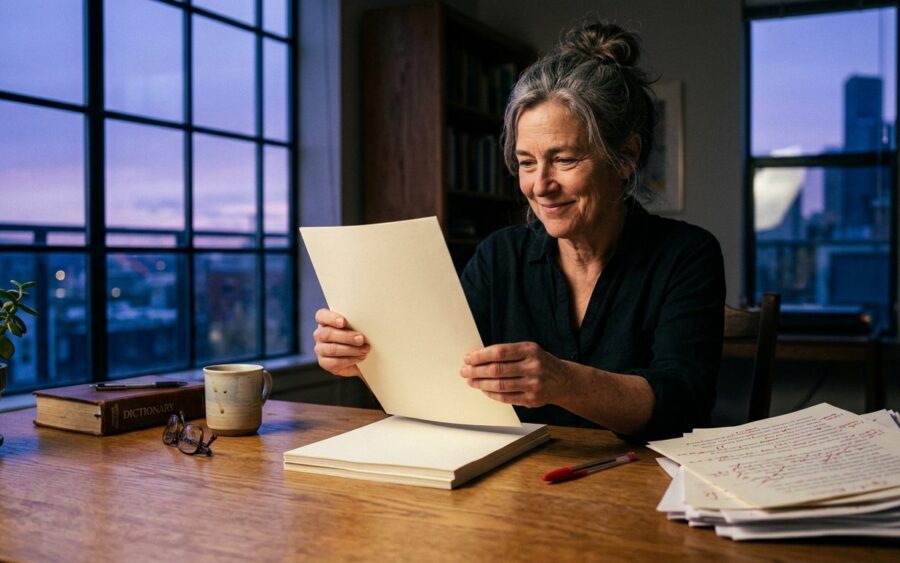

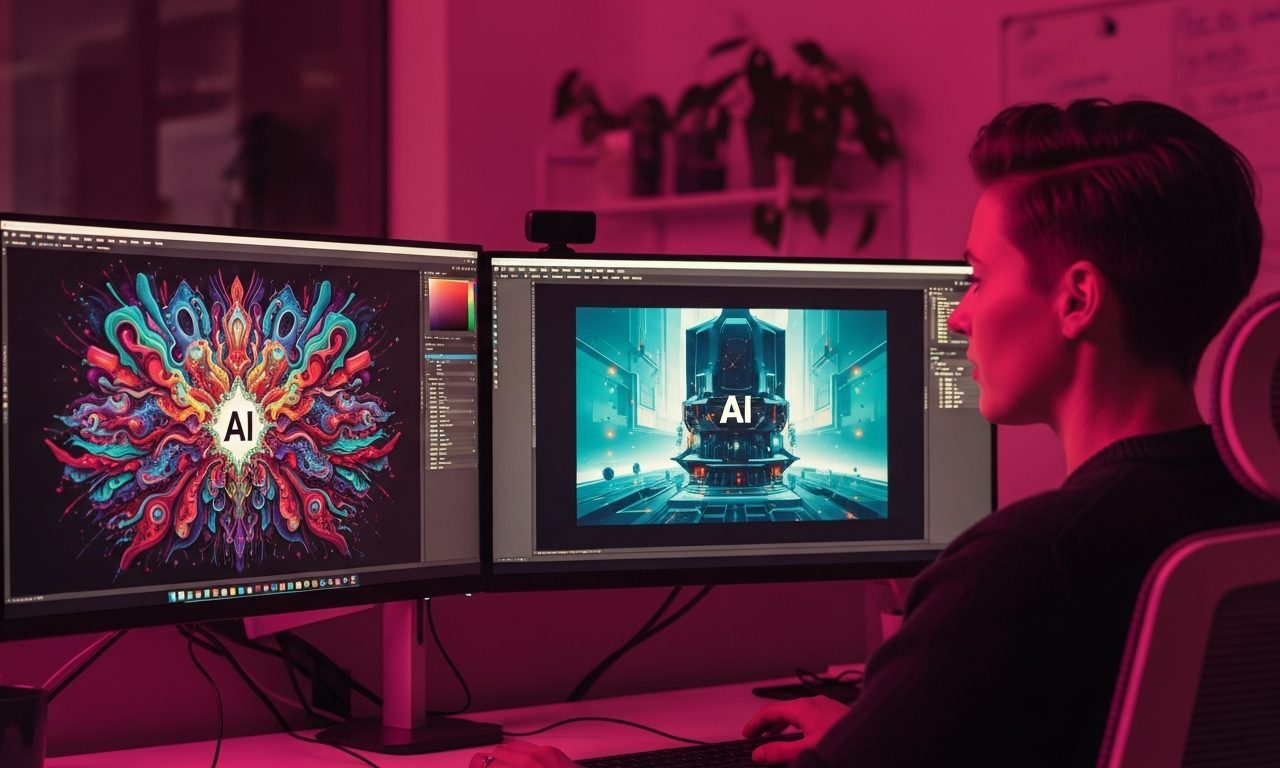
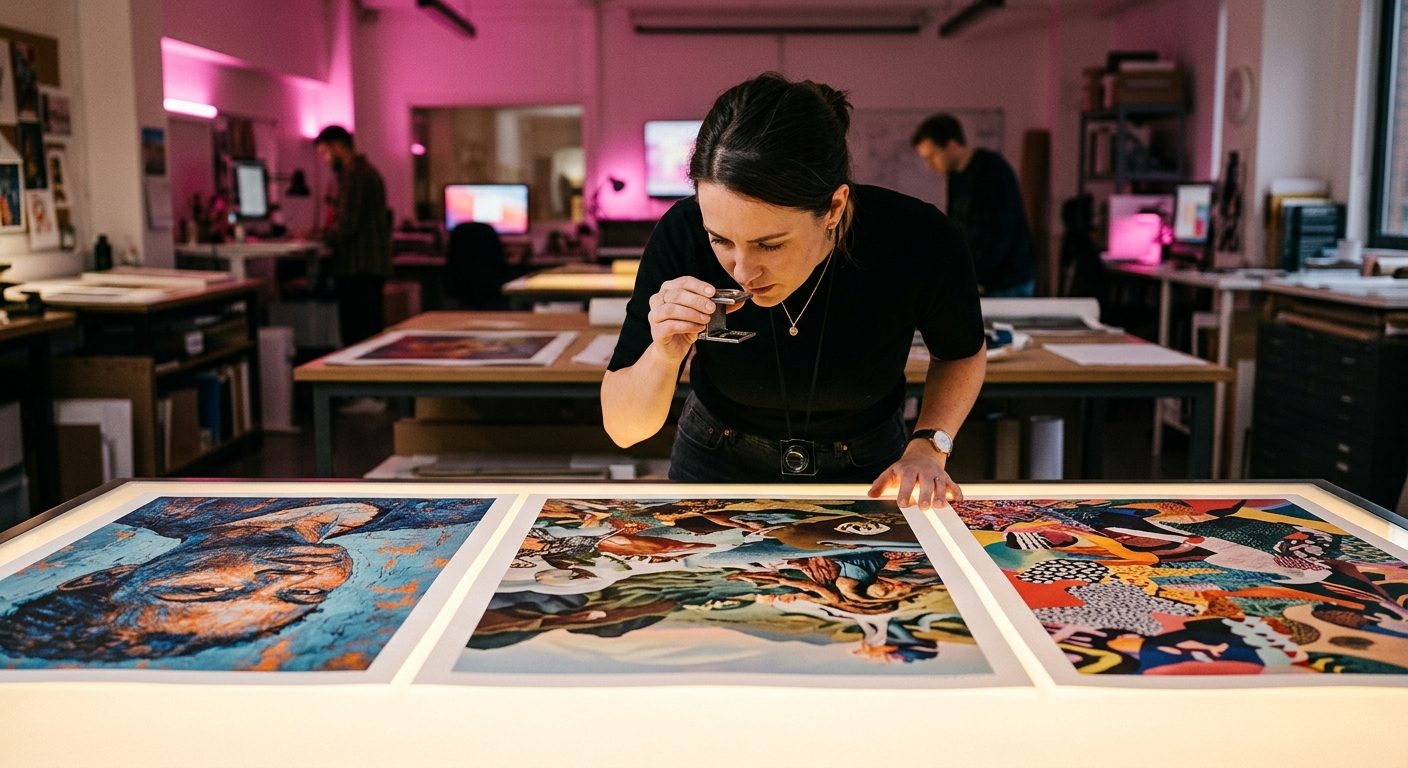
I needed a set of images for a client presentation last month. My brief: professional, editorial feel, consistent style, usable in commercial work, generated in under an hour. I tested Midjourney, DALL-E 3 via ChatGPT, and Adobe Firefly with the same five prompts. The differences were significant enough to be worth documenting for anyone making the same choice.
The test setup
Five prompts across different use cases:
- A person having a focused conversation in a modern office (people, realistic)
- A clean product flatlay on a white surface (commercial photography style)
- A conceptual illustration of data flowing between connected nodes (abstract/conceptual)
- A landscape photograph of a city at golden hour (environmental/atmospheric)
- A simple graphic icon set representing productivity concepts (design/illustration)
All three tools were used at their standard paid tiers as of early 2026.
Midjourney: what it does best
Midjourney produced the strongest results on prompts 3 and 4 — the conceptual illustration and the atmospheric landscape. The output has a distinct artistic quality that the other two tools do not match. When you want something that looks genuinely designed, with strong compositional choices and a consistent aesthetic, Midjourney is the clear leader.
For prompt 1 — the realistic person in an office — Midjourney produced beautiful images, but they looked like editorial art photographs, not business photography. They were too stylised for a slide deck that needed to look corporate and grounded.
The friction: Midjourney still requires working through Discord or a separate web interface. The prompt interface rewards iteration — getting great results takes two or three rounds of refinement. For someone without design intuition, that iteration can be frustrating because you may not know how to adjust prompts toward the result you want.
DALL-E 3 (via ChatGPT): what it does best
DALL-E 3 outperformed the others on prompt 5 — the icon set. It handled multi-element compositional prompts, including arrangements of multiple distinct objects, better than the others. It also handled prompt 1 the most naturally for business use: the people it generated looked real and appropriately corporate rather than editorially stylised.
The integration with ChatGPT is a significant practical advantage. You describe what you want conversationally, ChatGPT interprets the brief and generates the image, you ask for changes in plain language. For non-designers who struggle with prompt engineering, the conversational interface lowers the barrier substantially.
The weakness: DALL-E 3’s output can look smooth in a way that reads slightly synthetic on close inspection. The texture and detail that Midjourney produces are not there at the same level. For polished editorial work, you notice the difference. For practical business use, you often do not.
Adobe Firefly: what it does best
Adobe Firefly’s definitive advantage is intellectual property safety. Firefly is trained exclusively on Adobe Stock images, licensed content, and public domain material. Every image it generates is covered by Adobe’s commercial use indemnification. If you are generating images for commercial clients, that matters.
Firefly also integrates directly into Photoshop and Illustrator, which matters enormously if you are doing any downstream editing. Generating an image and then editing it in the same application, without export/import friction, changes the workflow.
The weakness: the output quality is behind both Midjourney and DALL-E on creative and atmospheric prompts. For prompts 3 and 4, Firefly’s results were noticeably flatter. For prompts 1 and 2 — realistic people and commercial product photography — it was competitive.
The decision for non-designers
| Use case | Best choice | Why |
|---|---|---|
| Commercial work requiring IP safety | Adobe Firefly | Indemnified training data, Adobe integration |
| Editorial, creative, atmospheric visuals | Midjourney | Best output quality, strongest aesthetic |
| Business presentations, everyday use | DALL-E 3 via ChatGPT | Easiest interface, good enough quality, integrated |
| Design work in Adobe Creative Cloud | Adobe Firefly | Native integration with Photoshop / Illustrator |
For the presentation I mentioned at the start: I used DALL-E 3 for the people shots, Firefly for the commercial-looking product images where I needed IP coverage, and Midjourney for one atmospheric hero image. None of the tools did everything I needed on their own. That is the honest answer about where the category is in 2026.
About the author
Shahid Saleem writes PickGearLab — a practical blog about AI tools, tutorials, and automation workflows for people who want real results, not another listicle. Certified in Microsoft AZ-900, CompTIA Security+, and AWS AI Practitioner, with 10+ years in enterprise IT.
→ Connect on LinkedIn · More about Shahid · Latest posts
Related reading
- Suno vs Udio: Which AI Music Generator Is Actually Usable for Creators in 2026?
- Gamma vs Canva vs Beautiful.ai: Which AI Tool Actually Builds a Deck You Can Present?
- Cursor vs Windsurf vs GitHub Copilot: Which AI Coding Tool Fits a Non-Developer in 2026?
- ChatGPT vs Gemini vs Claude vs Perplexity: Which AI Should You Use?
- AI and Copyright — Who Owns What an AI Creates?
- The Hidden Cost of Your AI Stack — Audit Framework
One practical AI tutorial. Every Monday.
Workflows like this one — straight to your inbox. Free. Unsubscribe in one click.
Subscribe free →